


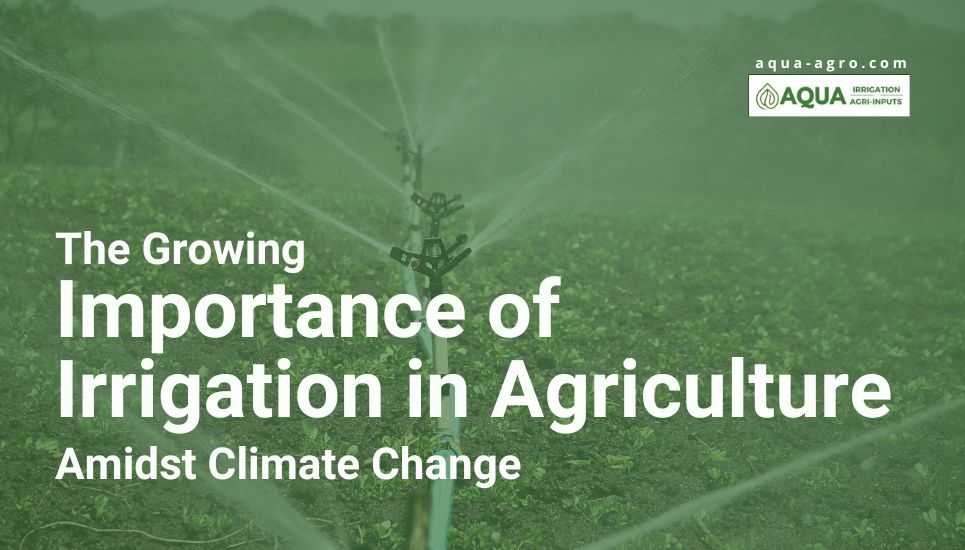
Imagine this: we are in the middle of our farms, looking out at crops that are fighting to stay alive in the extreme heat. At times, unexpected rains destroy our land without warning! We farmers have to deal with this harsh reality. All this is because of global climate change!
Due to the rising temperatures, unpredictable rains, and extreme weather events, traditional and old ways of farming won’t work anymore. But there is hope. Irrigation, which is the basis of modern farming, is the key to not only living but also thriving in these tough circumstances.
In this article, we will look at the importance of irrigation in agriculture, considering climate change and the water scarcity we are experiencing. We will also give farmers real-world methods they can use to protect their crops, save water, and make farming possible in the future.
Why Is Irrigation Necessary?
Irrigation has always been an important aspect for farmers, especially in places where flash floods or rains pour down unexpectedly. The importance of irrigation in agriculture is even more critical simply because climate change is making things worse. Good water management systems make sure that our plants get enough water, even when it doesn't rain often or doesn’t rain at all on our farms.
More water gets evaporated from the land and plants when the temperature goes up. We are to risk crop failure or lower returns if we don't have a strong watering system in our farms. Also, the rains are unpredictable, with very little to no rainfall when it is supposed to. Just last year, the rainy season saw very little rain, while this year saw rains even during winters. So irrigation systems need to be able to handle both unexpected big storms and dry times.
Rain has been an important source of water for many farmers for generations, but climate change is making that less likely. When rains become inconsistent, irrigation is a safety net. This gives farmers better control over when and how much water is directed to their crops, thereby preventing crops from getting stressed out during dry spells. This control is necessary to keep food safe and make sure gardening can go on for a long time.
Now that the weather is changing so quickly, the importance of irrigation in agriculture has become undeniable. Irrigation plays a key role in maintaining consistent food production even when climate conditions are rough. It ensures that we farmers can get stable crop yields even when we see unpredictable rains, highlighting why irrigation is necessary for sustainable farming. By adopting modern methods like drip irrigation, we farmers can make better use of water resources. This is an essential strategy to overcome the impact of climate change on agriculture and the challenges of water scarcity in dry parts of India.
What Is the Importance of Irrigation Systems?
The importance of irrigation in agriculture cannot be overstated, especially in the face of climate change and water scarcity. Because climate change is making the weather less regular, farmers need to spend money wisely and on the right irrigation methods to better use available water. Modern irrigation systems are essential solutions to cope with the effects of climate change and water scarcity, thereby mitigating the impact of climate change on agriculture.
Impact of Climate Change on Agriculture
Climate change is a major problem for farming. Frequent droughts, increasing temperatures, and storms have made things difficult for us farmers. This has reduced our annual yield and is posing challenges to our livelihood.
Also, water scarcity and climate change put extreme pressure on us farmers. Traditional farming practices that our forefathers used to rely on always depended on predictable weather. This is no longer sufficient to meet the demands of the growing Indian population.
Impact of Climate Change on Irrigation
The demand for efficient and smart irrigation systems has surged, as water is a limited yet critical resource. That said, climate changes pose these challenges for irrigation systems:
- More demand on water supplies means that new ways of conserving water are needed.
- The necessity of building agricultural infrastructure that can withstand severe weather.
- More energy is needed to pump water, which raises the cost for us farmers.
Importance of Irrigation in Addressing Climate Challenges
The importance of irrigation in agriculture has never been more important as climate change has altered weather patterns globally. Irrigation is not just about watering crops—it’s a cornerstone of sustainable farming in a warming world. Here’s why:
Combating Droughts and Floods
By implementing proper irrigation systems, we can ensure that the crops receive optimum water during dry spells. This reduces the impact of climate change on agriculture. It also prevents damage by managing water levels during heavy rains, highlighting why irrigation is necessary in uncertain climates.
Promoting Sustainable Practices
Drip irrigation and centre pivot irrigation systems can both help us reduce water wastage while allowing us to grow more with less, addressing both climate change and water scarcity.
Enhancing Resilience
By stabilising crop production, irrigation systems help us farmers overcome the challenges of extreme conditions—our livelihoods are protected. This underscores the benefits of irrigation in maintaining food security and resource efficiency.
Benefits of Irrigation in the Context of Climate Change
The benefits of irrigation are not just focused on retaining crops but also on improving food security, optimum resource management, and helping with sustainable farming practices.
Less damage from extreme weather events and a stable food supply
Climate change is causing storms, heat waves, and random, unpredicted rainfall more often. As a safety measure, irrigation systems let farms change when they water based on the weather, so plants don't get too wet during heavy rains and stay hydrated during heat waves. Such a customised approach protects crops from potential damage and leads to stable yield throughout the year, reflecting the importance of irrigation in agriculture in combating environmental volatility.
Conserving water
Given the rising threat of climate change and water scarcity, many places are running out of water faster than ever. This makes saving water even more important than before. We can conserve water by drip irrigation or other irrigation methods, thereby giving crops the right amount of water. Farmers can save water and protect local water supplies by not watering their crops too much. Also, using more environmentally friendly ways to water crops can lower the amount of energy needed for pumping and distributing water, which lowers the costs of maintaining the farm—reinforcing why irrigation is necessary for resource-efficient farming.
Higher control over the water supply
Because weather patterns are difficult to predict, relying on nature alone is no longer enough. So, farmers must have better control over the amount of water dispersed to crops during storms or dry spells. This keeps crops safe and ensures efficient water utilisation. This not only enhances farm yield but also underscores why irrigation is important for us farmers.
Crop growth at its best
We can improve the health of crops by timing the water supply accurately. The reason is pretty simple—providing sufficient water supply at the right time makes the crops grow faster. This also handles the stress they face growing in hotter weather conditions, highlighting the benefits of irrigation in addressing agricultural challenges. So as farmers, we get better quality yet higher yields.
What we farmers can do to adapt to climate changes
We must adopt advanced systems like drip irrigation and centre pivot systems. This move away from traditional farming systems will help us optimise water use and increase our yield. In addition to this, we must try and invest in real-time weather monitoring systems. This can help us farmers to plan irrigation schedules effectively.
It is understood, but I am stressing again—we must conserve water. We should start focusing on rainwater harvesting and reuse wastewater wherever possible. This way, we can significantly reduce our dependence on natural water sources.
Importance of Irrigation in Sustainable Farming
As climate change worsens, healthy farming methods are no longer a choice—they are a must. Farmers will be able to do well in spite of these problems if they have irrigation systems that save water and use energy efficiently.
Improvements in technology
With innovative technologies like sensor-based irrigation, we can check the moisture levels of the soil and customise the release of water to crops. This way we can prevent excess and undersupply of water to crops. Based on real-time weather forecasts, these smart irrigation systems can change the timing of watering the crops. This helps us farmers conserve more water. These improvements help farmers save resources while still getting high food returns. This makes farming more long-term viable.
Weather-resilient crops
Progress with agricultural research is also developing crops that can survive in harsh weather like drought and heat waves. With the apt irrigation methods, these crops can thrive in regions that are susceptible to climate change. This will help farmers safeguard their agricultural incomes and hedge against climate change.
Support for sustainable practices from the government
Supporting long-lasting irrigation systems is becoming more and more important to governments and farming groups. It's easier for farmers to switch to farming that is more resilient to climate change because they can get subsidies and other benefits to use tools that save water. These programs can make a big difference and help farmers build the facilities they need to deal with climate change.
Reusing and recycling water
In regions where there is a scarcity of water, recycling and reusing water for irrigation can lessen the burden on natural water resources. Collecting rainwater, also known as rainwater harvesting, and repurposing wastewater for irrigation are game-changers in the long term for farmers like us. These ways not only use less water, but they also help make farms more resilient in areas that are short on water.
With these tips, irrigation systems can become an important part of climate-smart farming, helping farms adjust to changing weather conditions while still being productive and caring for the environment. Good karma if you ask me.
When climate change is upsetting the cycles that farms have depended on for hundreds of years, more things are at stake now. Not only do unpredictable rains, long droughts, and scorching temperatures threaten crops, they also threaten our livelihoods. Smarter, more efficient irrigation systems that give us farmers the tools we need to change and do well are the first step towards sustainable agriculture.
More than ever, every drop of water is important. We farmers aren't just protecting our fields when we use new watering systems; remember, we are also protecting our future. It's not just about farming; it's also about strength, hope, and staying alive in the face of more and more problems.
The future calls for brave actions. It's no longer a choice; irrigation is a must. Investing in solutions that do more than just weather the storm is time. These solutions will keep farms going for generations. Because the world does better when we farmers do well!


