The role of an irrigation timer and automation in modern irrigation systems
Simplify water management, lower labour costs, and optimise water utilisation by automating irrigation. Timers and controls play an important part in these systems. They help farmers and gardeners to water more effectively and sustainably.
An overview of irrigation timers and controllers
You can automate watering schedules using irrigation timers and controllers. They make excellent choices for farms, gardens, and lawns. They provide the correct water supply, which saves time and money while increasing crop output.
What is an irrigation timer?
Farmers and gardeners who manually turn on water systems in their farms have complained to us how inefficient they are. They say there is a lot of water waste; sometimes they end up overwatering or watering less than what is required. There is a simple solution for this—using an irrigation timer.
Using an irrigation timer, a farmer can set any particular time of the day to water their fields. For instance, they can set to only water plants in the morning every day of the week except on Sunday. They can also set the duration of watering based on the type of crop they are growing. For instance, if the farmer is growing flowering plants, water can be released for 10–15 minutes. They are also suitable for a variety of irrigation systems—drip irrigation and sprinkler sets.
Types of drip irrigation timers and their functions
- Mechanical timers are the easiest to use. They can work even when there is no electricity. This is especially helpful in rural parts of India where electricity is unpredictable and also for small gardens.
- Digital timers, on the other hand, are slightly advanced timers. With these, farmers can set up schedules suitable for larger farms and more complex irrigation systems. They are especially useful if you are getting a mix of different types of crops.
- Smart timers are highly advanced systems. This includes all the perks of a digital timer, and they integrate with mobile apps, allowing users to control irrigation remotely.
Benefits of using a water timer controller for efficient irrigation
- Saves water by delivering precise amounts at the right time.
- Reduces labour by eliminating the need for manual watering.
- Ensures consistent water distribution, improving plant health and crop yield.
Exploring tap water controllers and tap timers
How tap timers simplify watering tasks
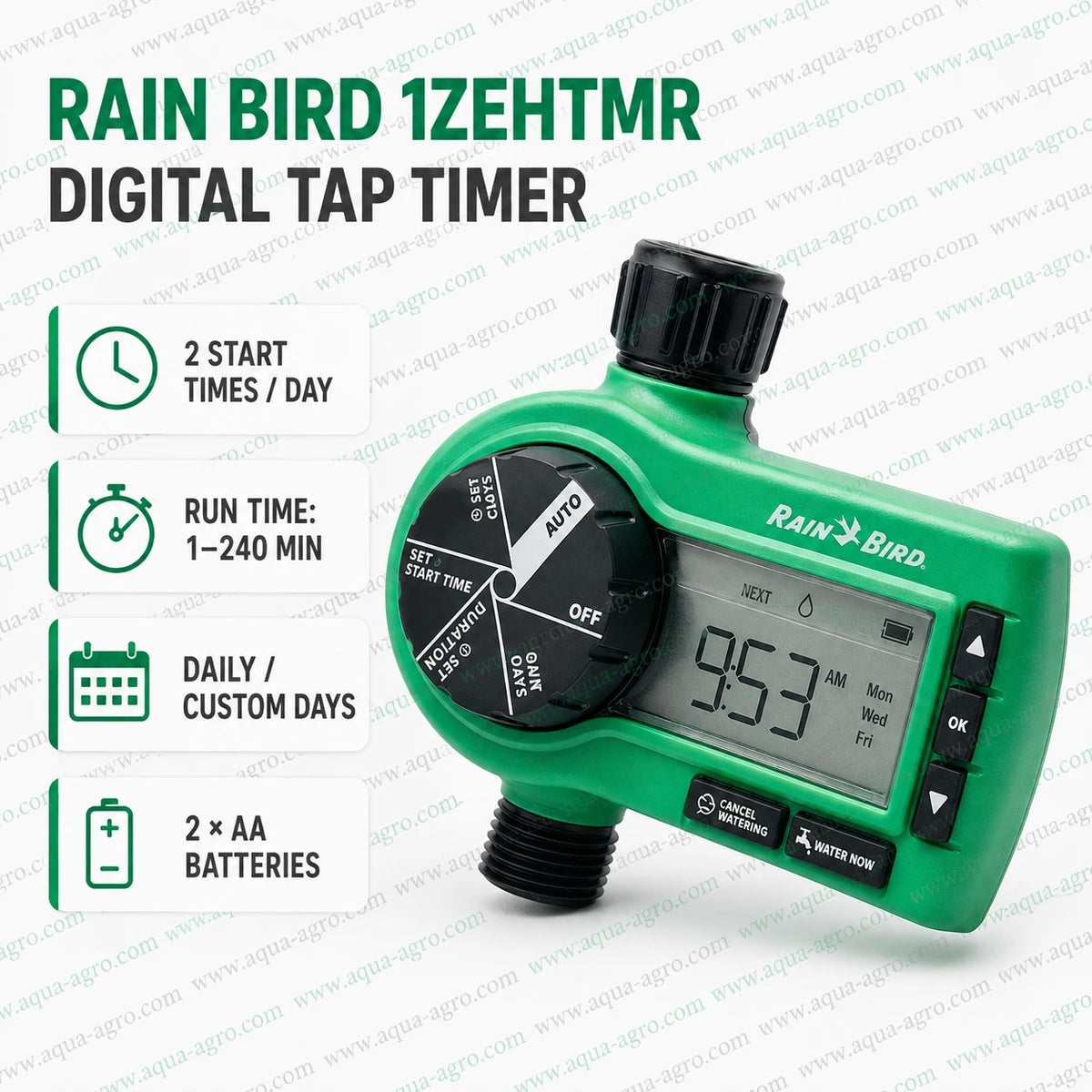
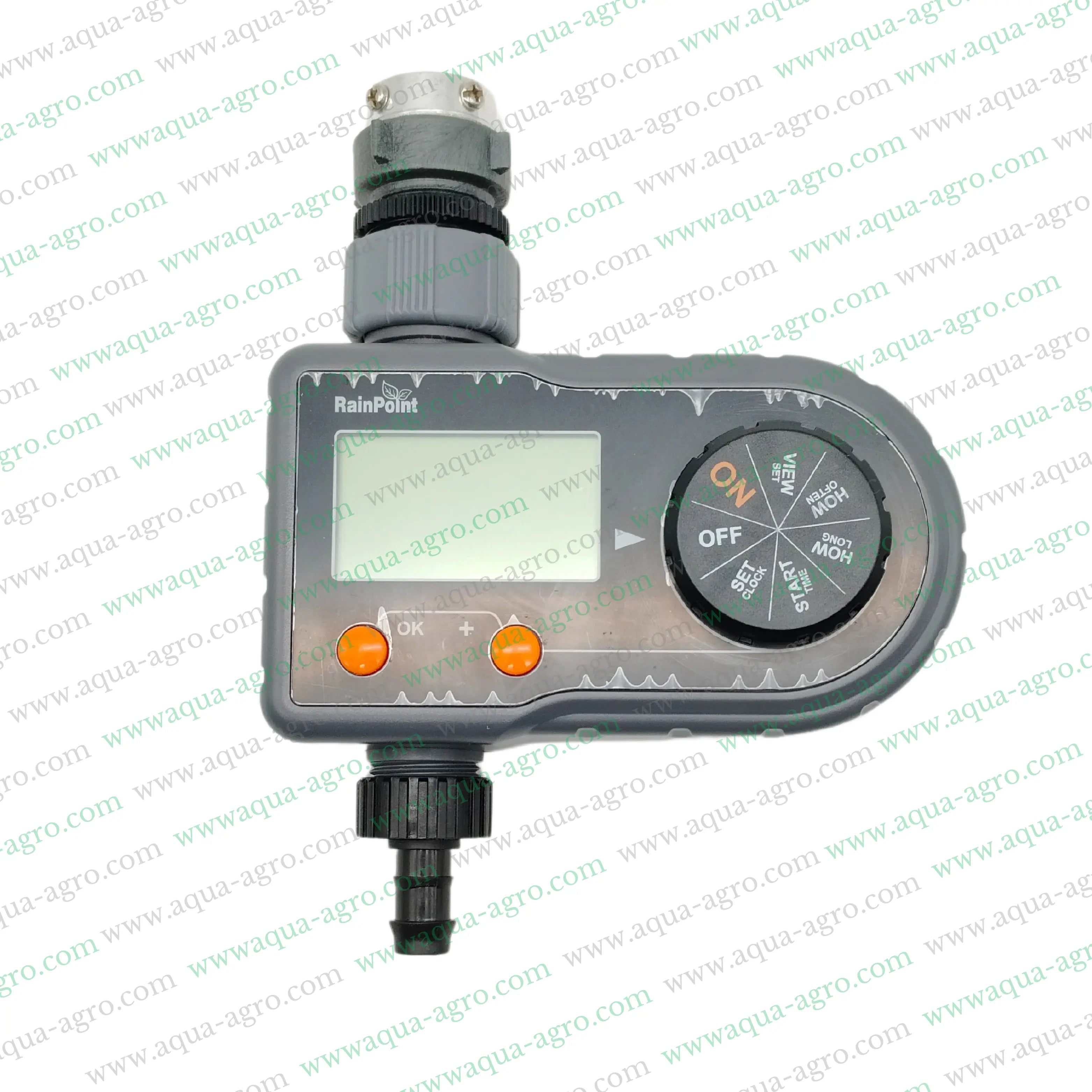
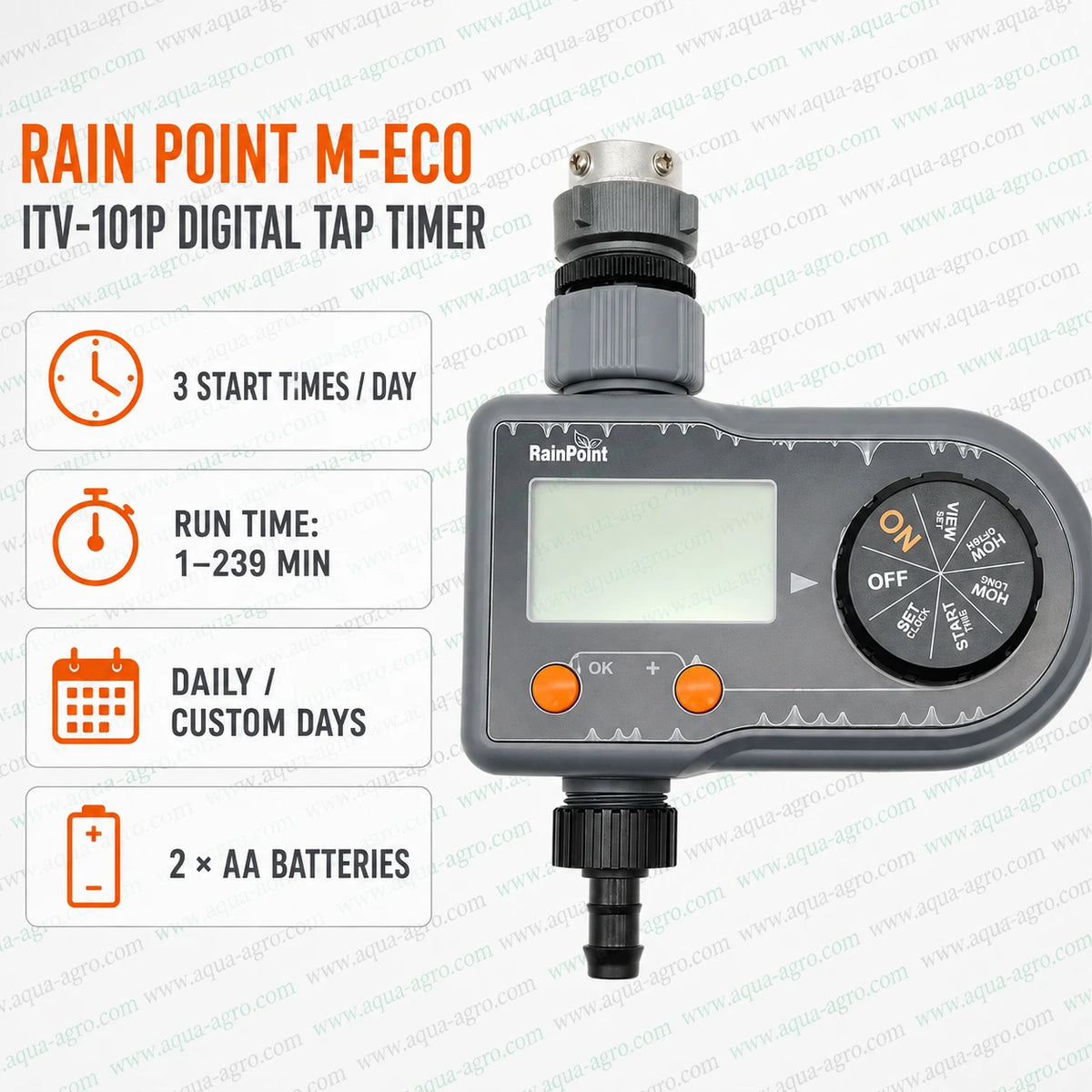
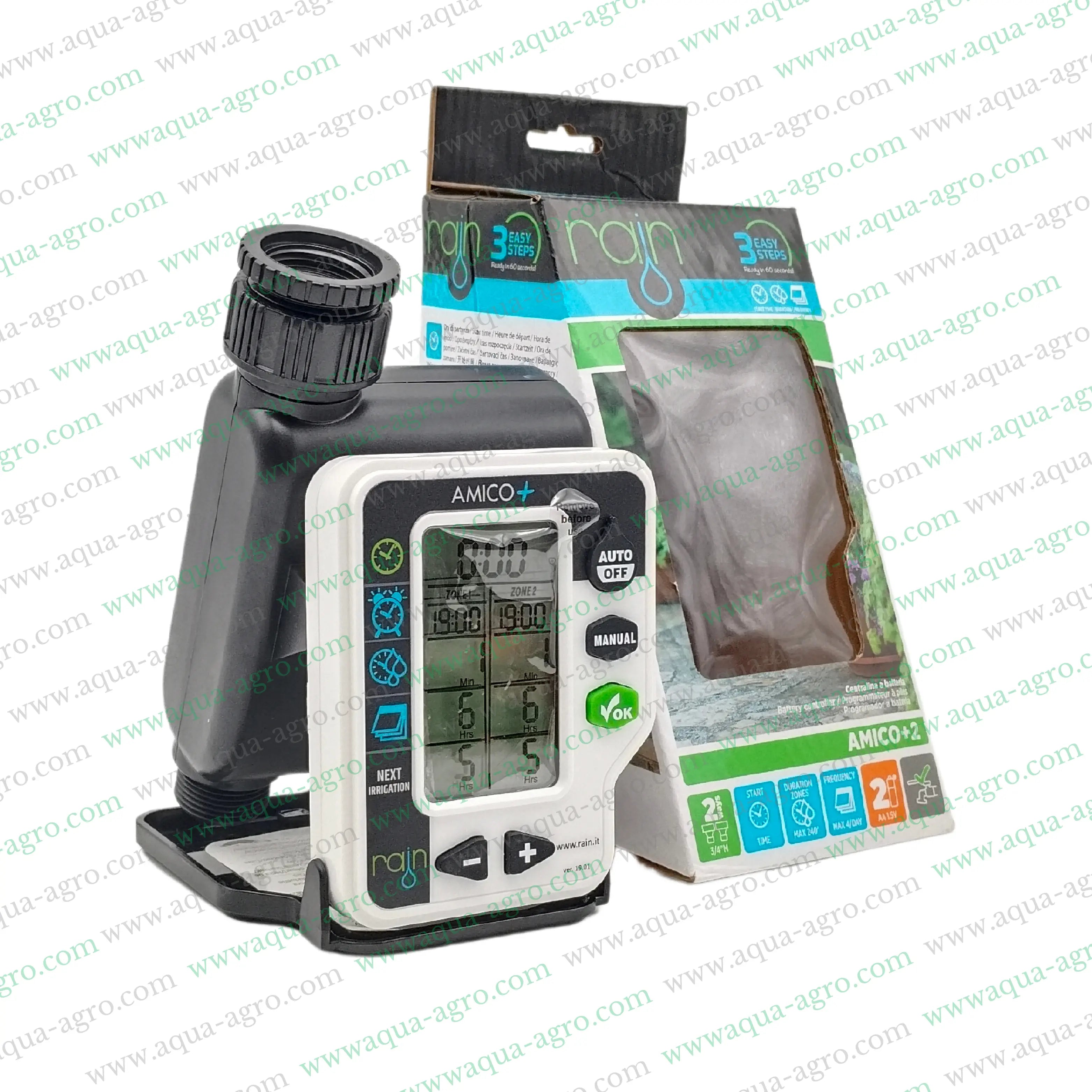
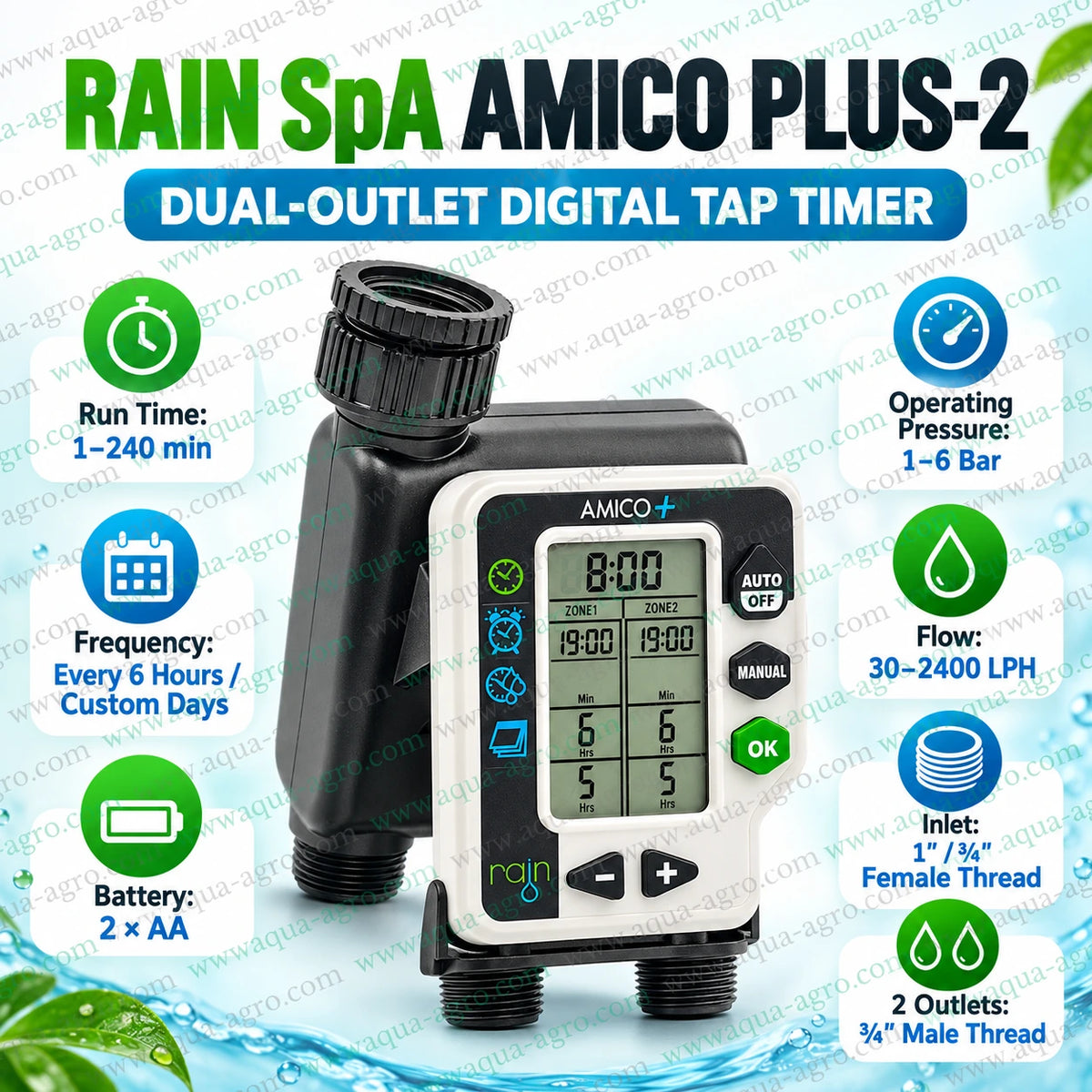
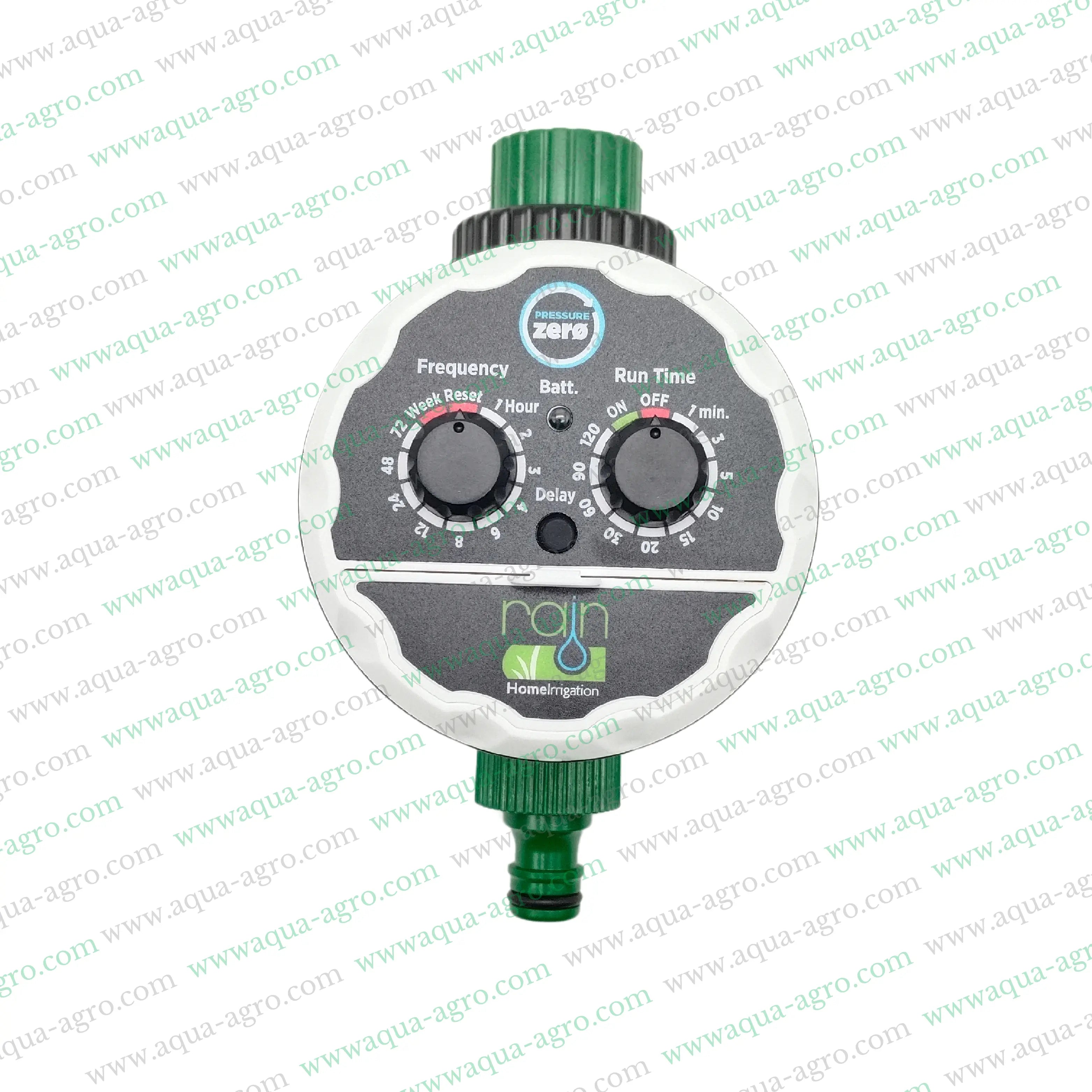
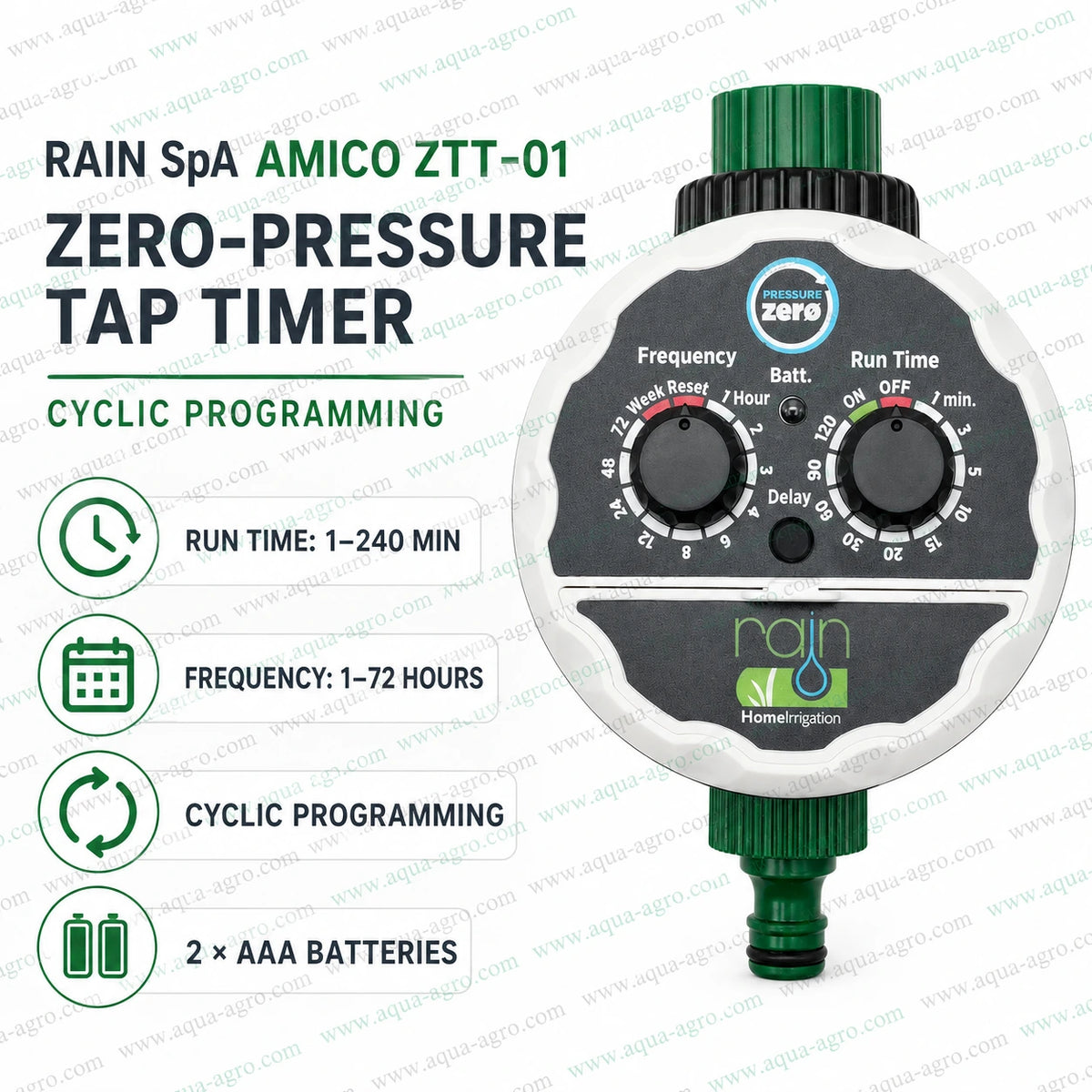
Tap timers are compact devices attached to water taps to control watering schedules. They automate irrigation for gardens and lawns, ensuring convenience and efficiency.
Best practices for using water tap timers
- Check for leaks and ensure tight connections to prevent water wastage.
- Set watering schedules based on plant and soil requirements.
- Regularly clean the timer to maintain performance.
Water timer valves: how they work
Water timer valves are used in farms to manage the flow of water. They automatically open and close based on schedules that are set into these valves. They connect directly to irrigation systems like drip lines or sprinklers and precisely control when and how much water is released. By setting up specific intervals, these valves prevent overwatering, save water, and reduce manual effort. They maintain consistent moisture levels and promote efficient irrigation for both small gardens and large agricultural setups.
Features of sprinkler tap timers for lawn irrigation
- Adjustable settings for custom watering schedules.
- Durable construction to withstand outdoor conditions.
- Battery-operated designs for portability and ease of use.
Choosing the right water timer valve for your needs
When selecting the right water timer valve for your farm, you must consider many crucial elements to make sure irrigation is proper and reliable.
Begin by determining the water pressure needed to meet the valve's capacity.
Then think of the size of your irrigation system. Remember, larger fields may require complex valves with numerous timing features.
Are they compatible with your existing system? You have to make sure the valve works flawlessly with your drip pipes or sprinklers.
If automation is a top requirement, search for devices with programmable schedules or intelligent features.
What is irrigation automation?
Irrigation automation is a method in agriculture where water distribution is managed by someone personally. They use technology such as timers, sensors, and controllers.
Importance of agriculture irrigation automation for farmers
- Reduces water waste and helps set up sustainable farming techniques.
- Saves effort and time, allowing farmers to concentrate on other activities.
- Increases agricultural yield by ensuring regular and accurate watering.
Benefits of drip irrigation automation in India
Drip irrigation automation plays an important part in the Indian agricultural industry. It helps in conserving water in areas where there is little rainfall and natural water supply. Not just that, it also helps increase crop yield on small and big farms.
Automated irrigation systems for farmers
How automated agriculture irrigation systems enhance productivity
- Automates watering schedules, reducing the need for manual monitoring.
- Ensures uniform water distribution across fields, improving crop growth.
Real-life examples of irrigation automation in India
In water-scarce areas of Maharashtra, Tamil Nadu, farmers have used automated methods to manage water more efficiently. They have conserved water by preventing water waste at the same time improving crop yield.
Irrigation pump automation: a key component
Advantages of integrating pump automation in irrigation systems
- Ensures a steady water supply by automating pump operations.
- Prevents pump overload and enhances energy efficiency.
Tips for efficient irrigation pump automation
- Use sensors to monitor soil moisture levels on your crops. You may program the automation to activate pumps when the soil moisture level goes below a specified threshold.
- Service your irrigation timers regularly to reduce malfunctions and ensure that they run well.
What is an automated drip irrigation system?
Automated drip irrigation systems improve agricultural yield and sustainable farming practices by decreasing water waste and encouraging effective irrigation. They use drip emitters and advanced automation technology to provide exact volumes of water straight to plant roots.
An automated drip irrigation system is made up of timers, sensors, and controls that modify water flow according to the following 3 factors:
- soil moisture
- weather conditions
- crop requirements
Components of an automated drip irrigation system
- Drip irrigation emitters deliver water straight to the plant roots.
- Timers and controllers plan and monitor water delivery.
- Sensors detect soil moisture and weather conditions, allowing for smart changes.
Automated drip irrigation systems in India: popular solutions
Brands like Jain and Netafim offer innovative automated systems tailored for Indian farms, featuring energy-efficient designs and user-friendly interfaces.
Advanced features of irrigation timers for drip systems
Smart irrigation timers with mobile integration
Smart timers allow remote control via mobile apps, offering features like real-time monitoring and weather-based adjustments.
Scheduling and monitoring water usage with drip irrigation timers
Drip irrigation timers are how farmers ensure that the plants receive the proper amount of water at the right time. Farmers and gardeners have been using these irrigation timers to completely automate the irrigation process. They lessen the danger of overwatering or underwatering. Advanced versions of the irrigation filters also have monitoring capabilities. They analyse water consumption, offering significant insights into improving irrigation efficiency, conserving water, and lowering operational expenses.
Factors to consider when selecting an irrigation timer
Comparing manual, semi-automatic, and fully automated timers
- Manual timers: affordable and straightforward but require manual adjustments.
- Semi-automatic timers: Offer basic automation with limited programming options.
- Fully automated timers feature advanced technology for complete irrigation control.
Best irrigation timers for Indian farmers
Top options include timers with weather resistance, long battery life, and compatibility with various irrigation systems.
Top brands and products for tap timers and water controllers
Recommended sprinkler tap timers for gardens and lawns
Look for durable, easy-to-use tap timers with programmable settings for small gardens and residential lawns.
Affordable water timer controllers for small farms
Budget-friendly options like Aqua Agro’s irrigation timers combine reliability and efficiency, making them perfect for small-scale farms.
Conclusion
- Why irrigation timers and controllers are essential: They simplify water management, save resources, and increase crop yield. This makes them an essential part of all modern irrigation systems.
- Advancing agriculture with automation: Investing in high-quality irrigation automation systems provides long-term benefits to farmers, landscapers, and gardeners.