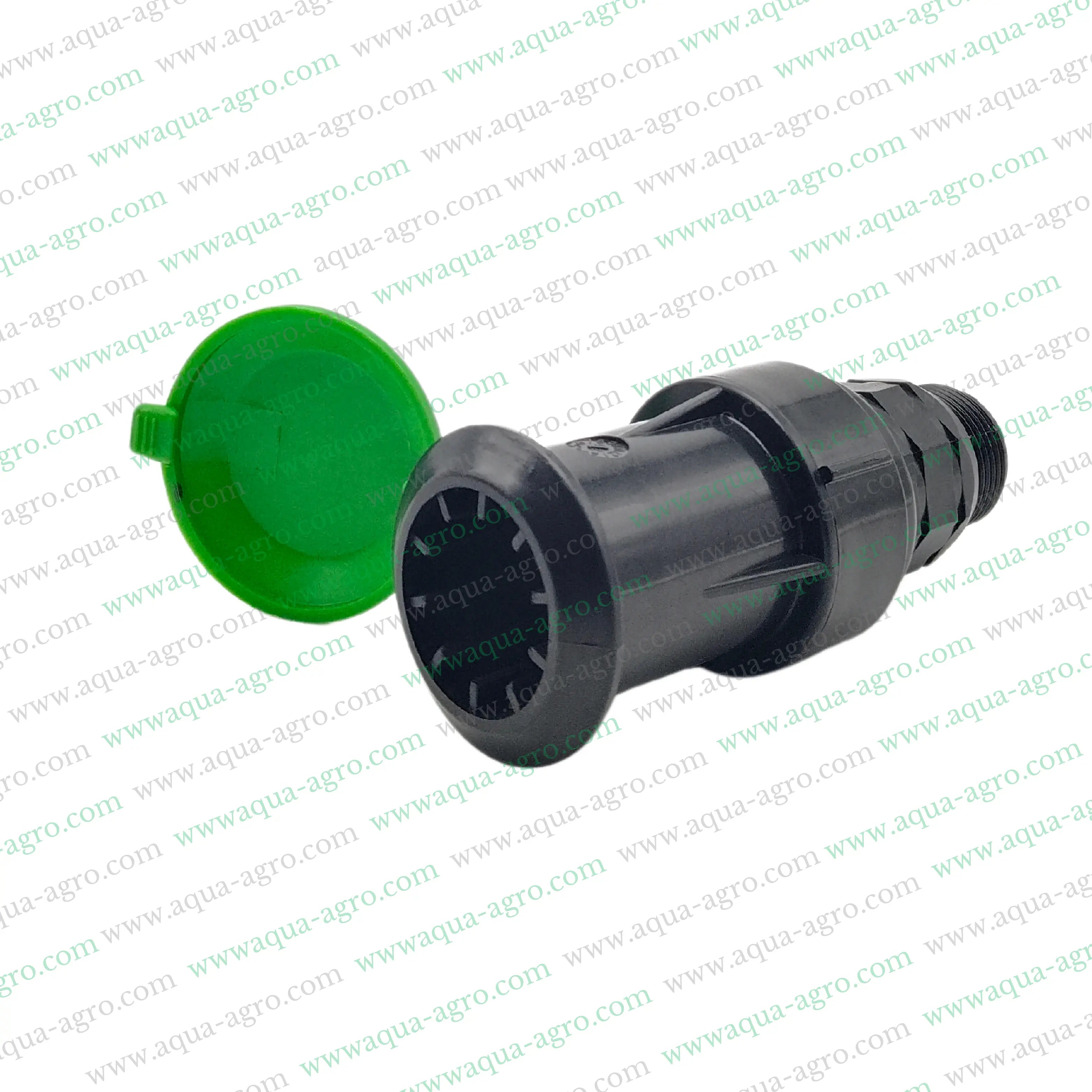
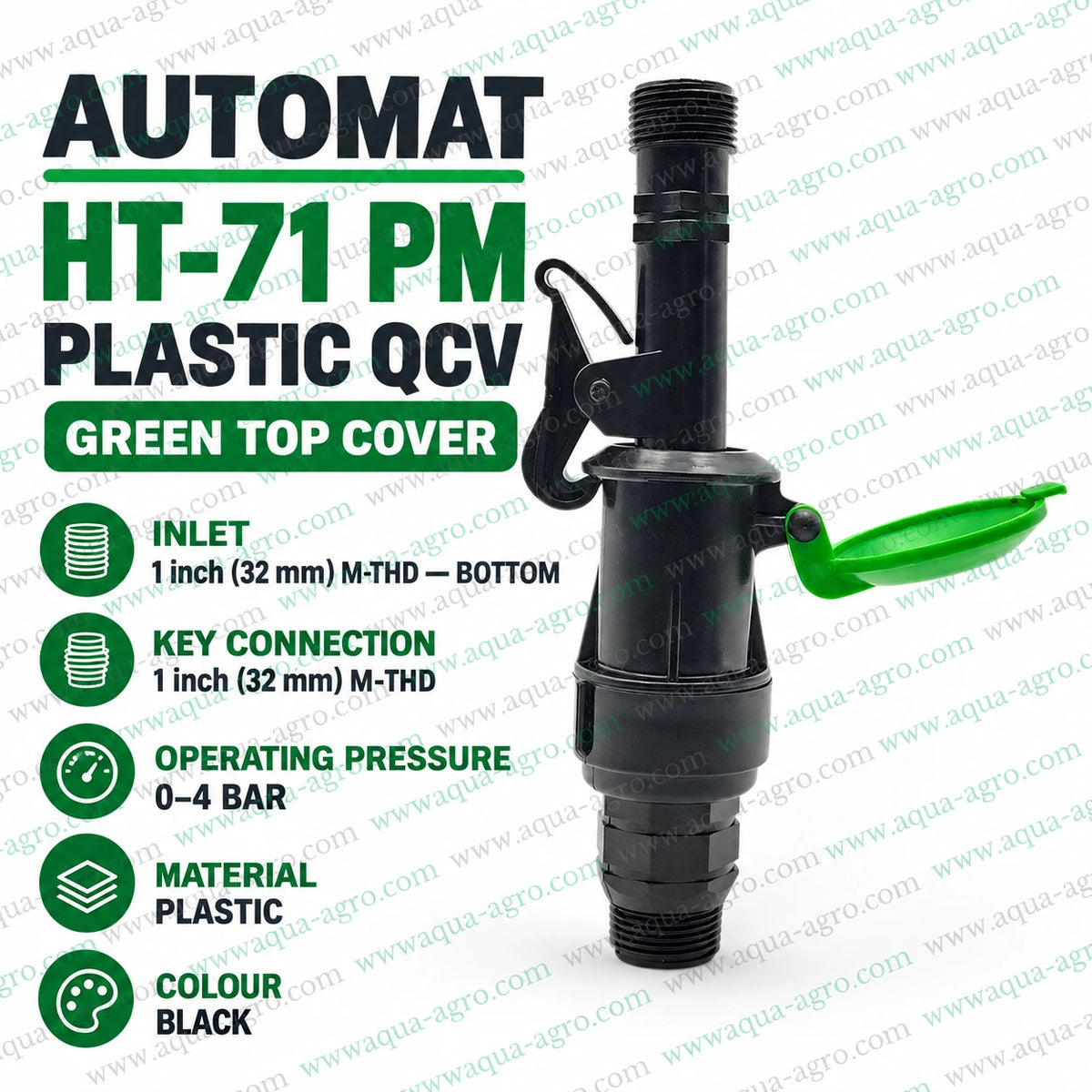
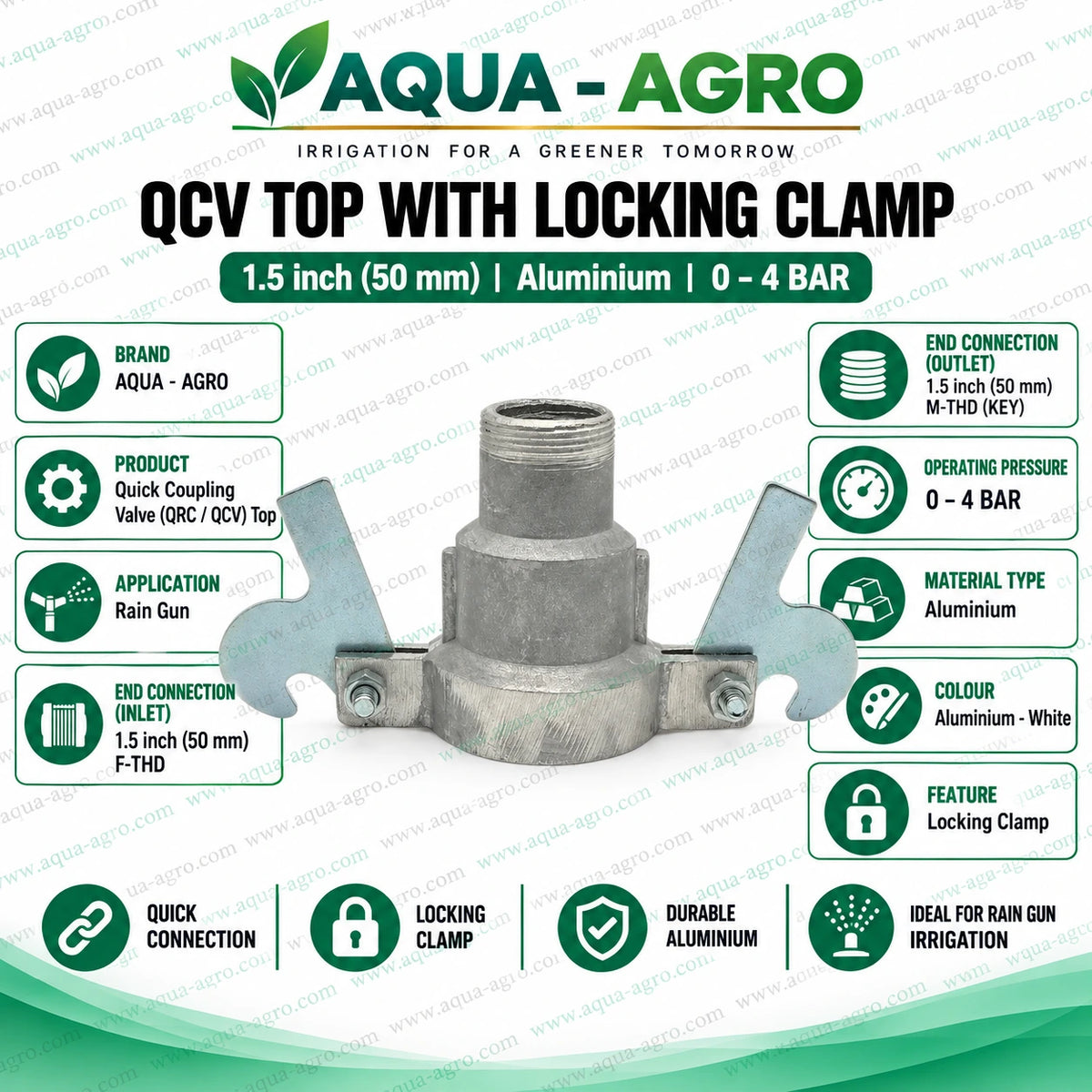
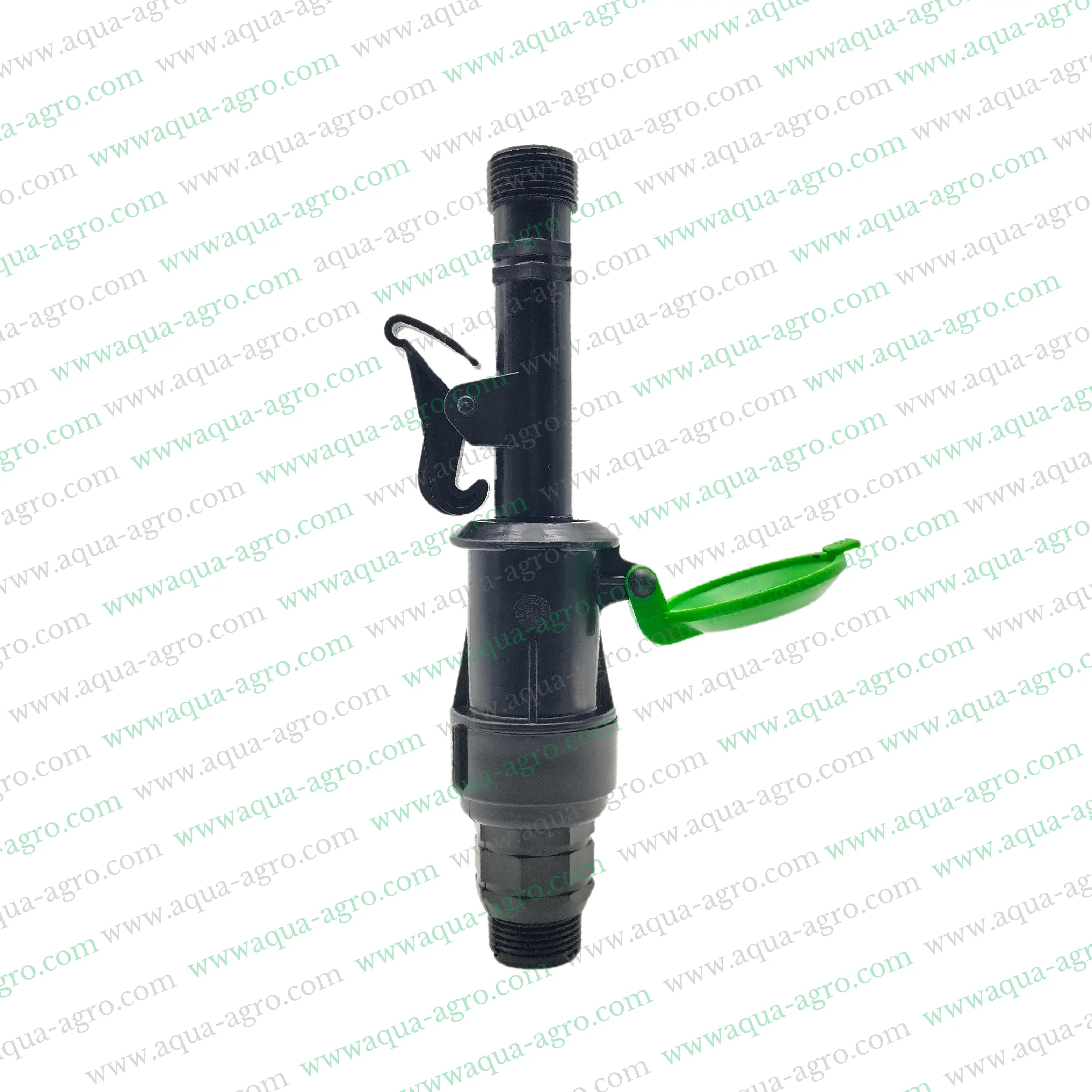
Types of Quick Coupling Valves Available
- Push-to-Connect: Easy handling, perfect for quick setups in farms and gardens.
- Threaded: Secure and durable for high-pressure sprinkler systems.
- Hydraulic: Engineered for heavy-duty industrial applications.
- Pneumatic: Ideal for air and gas systems.
Benefits of Quick Coupling Valves:
- Efficiency: Saves time during installations.
- Versatility: Suited for both hydrant points for quick showers and quick couplings for sprinklers or high-pressure rain guns.
- Durability: long-lasting performance with minimal coupling maintenance.
Applications of Quick Coupling Valves:
- Agriculture: irrigation systems, sprinklers, rain guns.
- HVAC: Quick connections in cooling and heating systems.
- Industrial Equipment: Fluid control for manufacturing processes.
How to Choose the Right QRC Valve / QCV Valve:
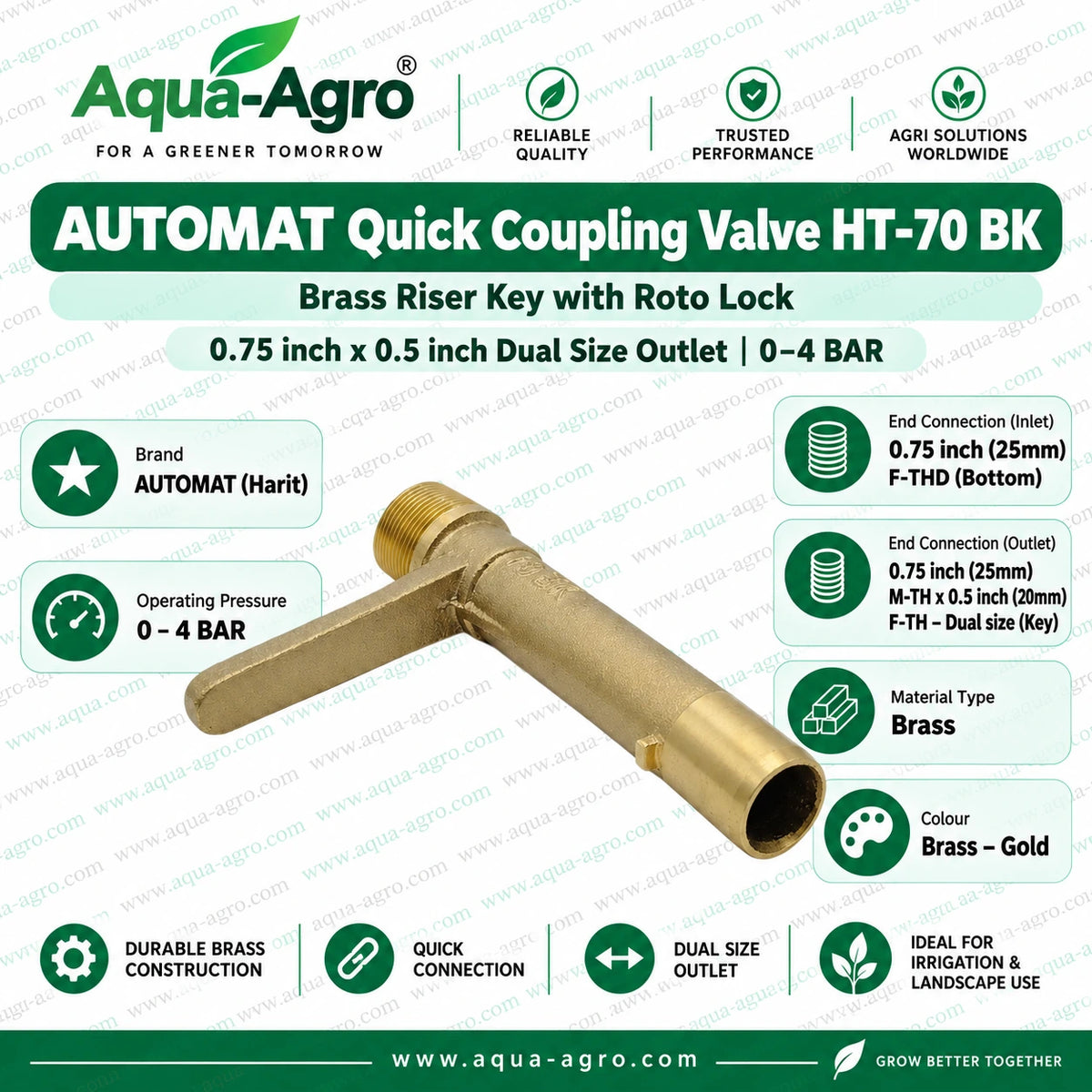
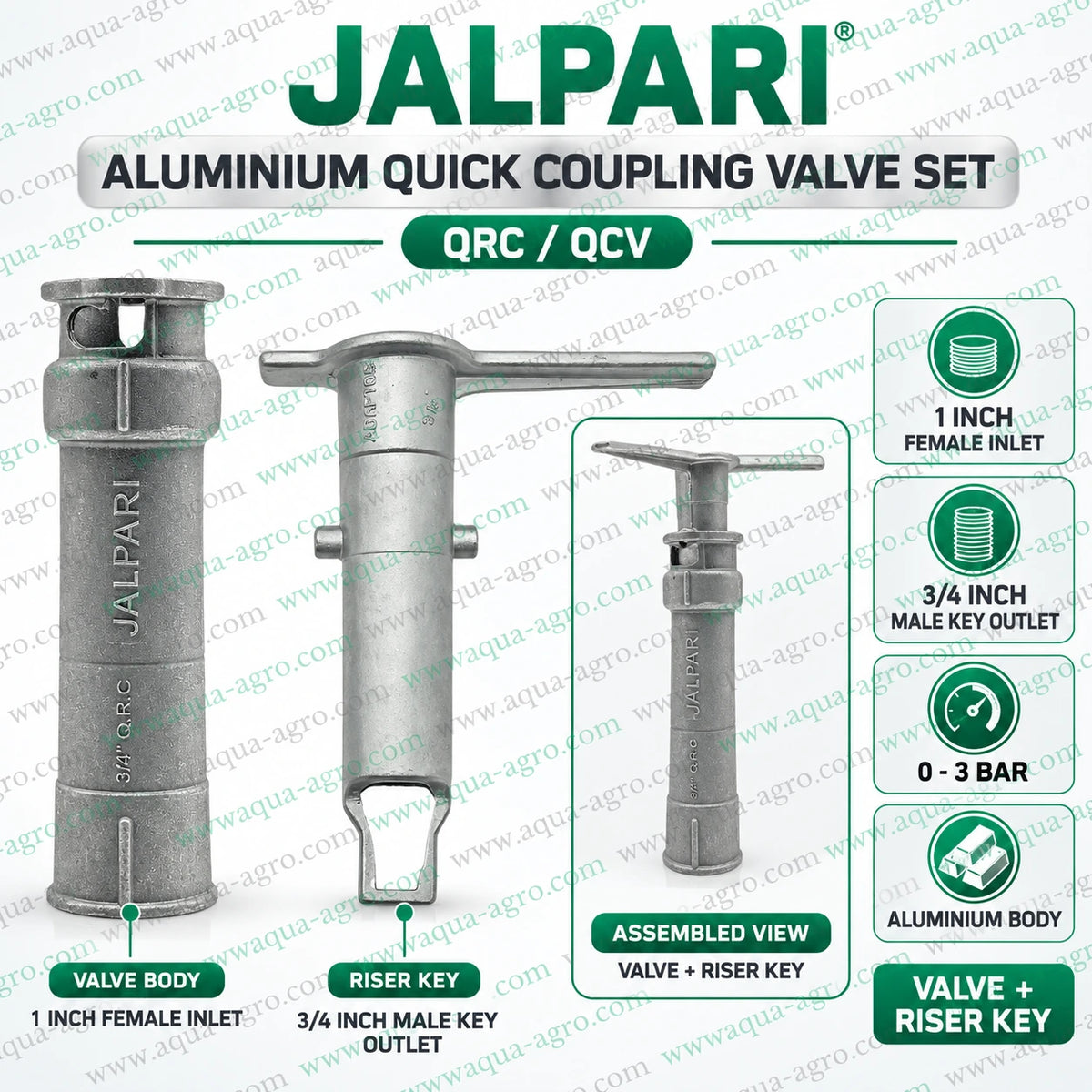
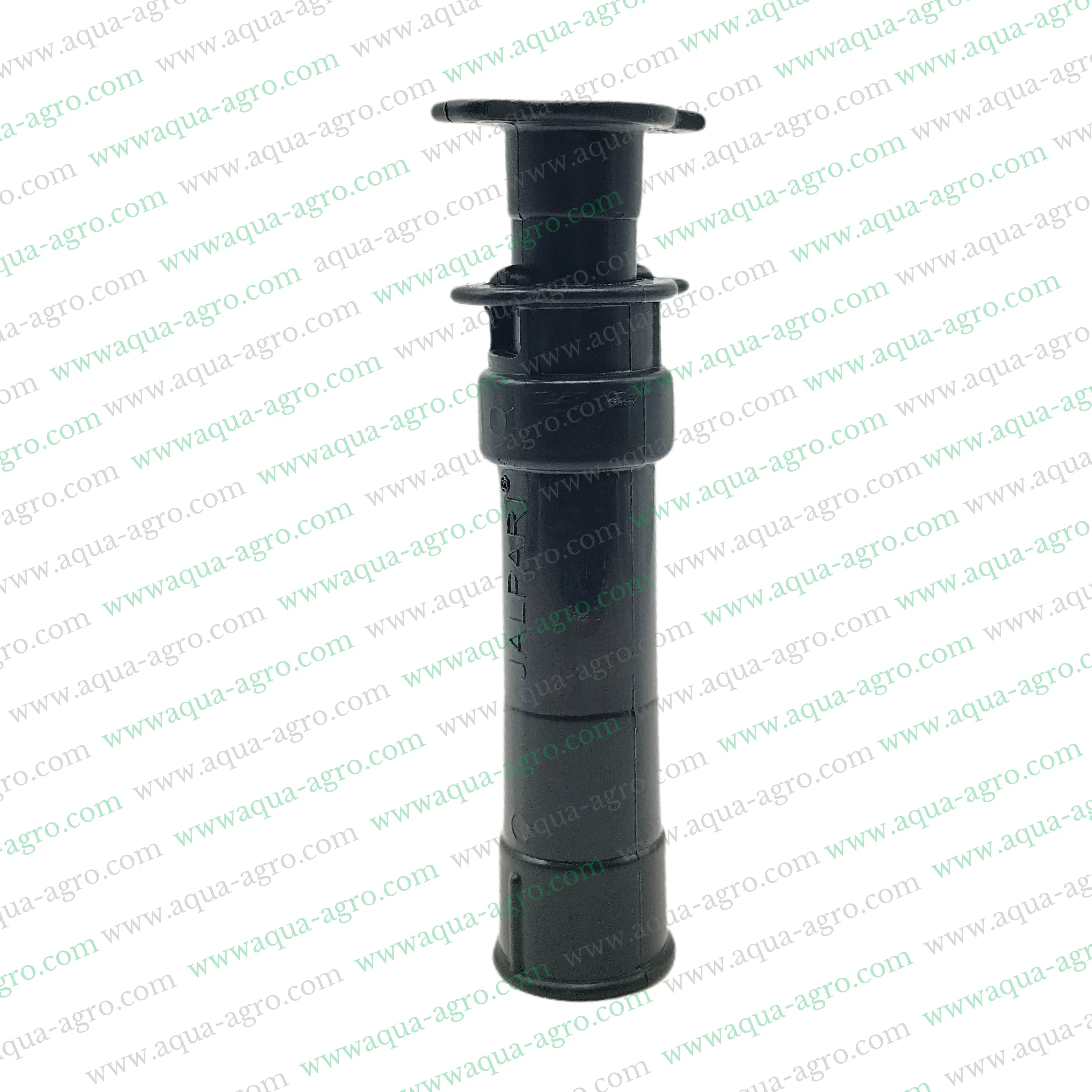
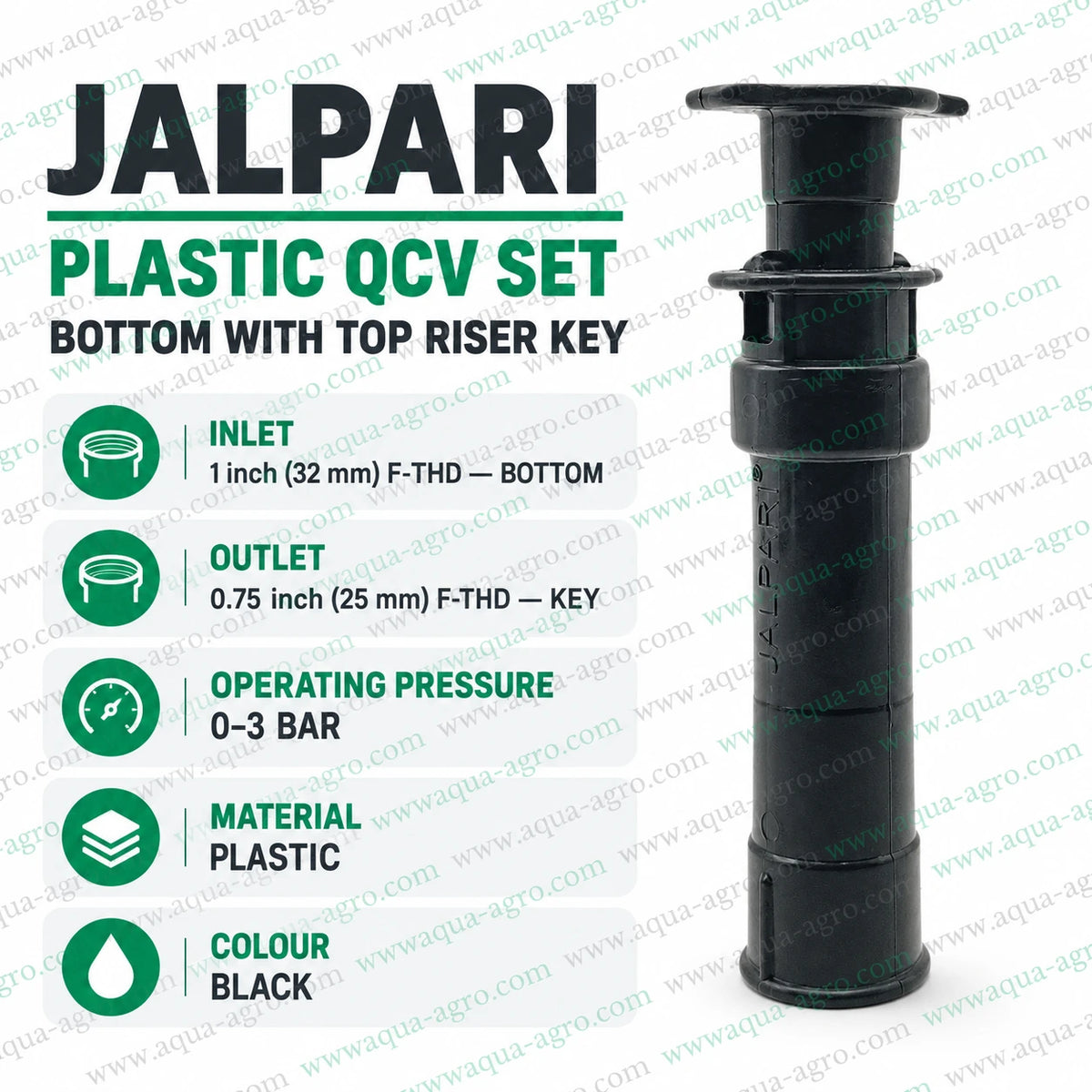
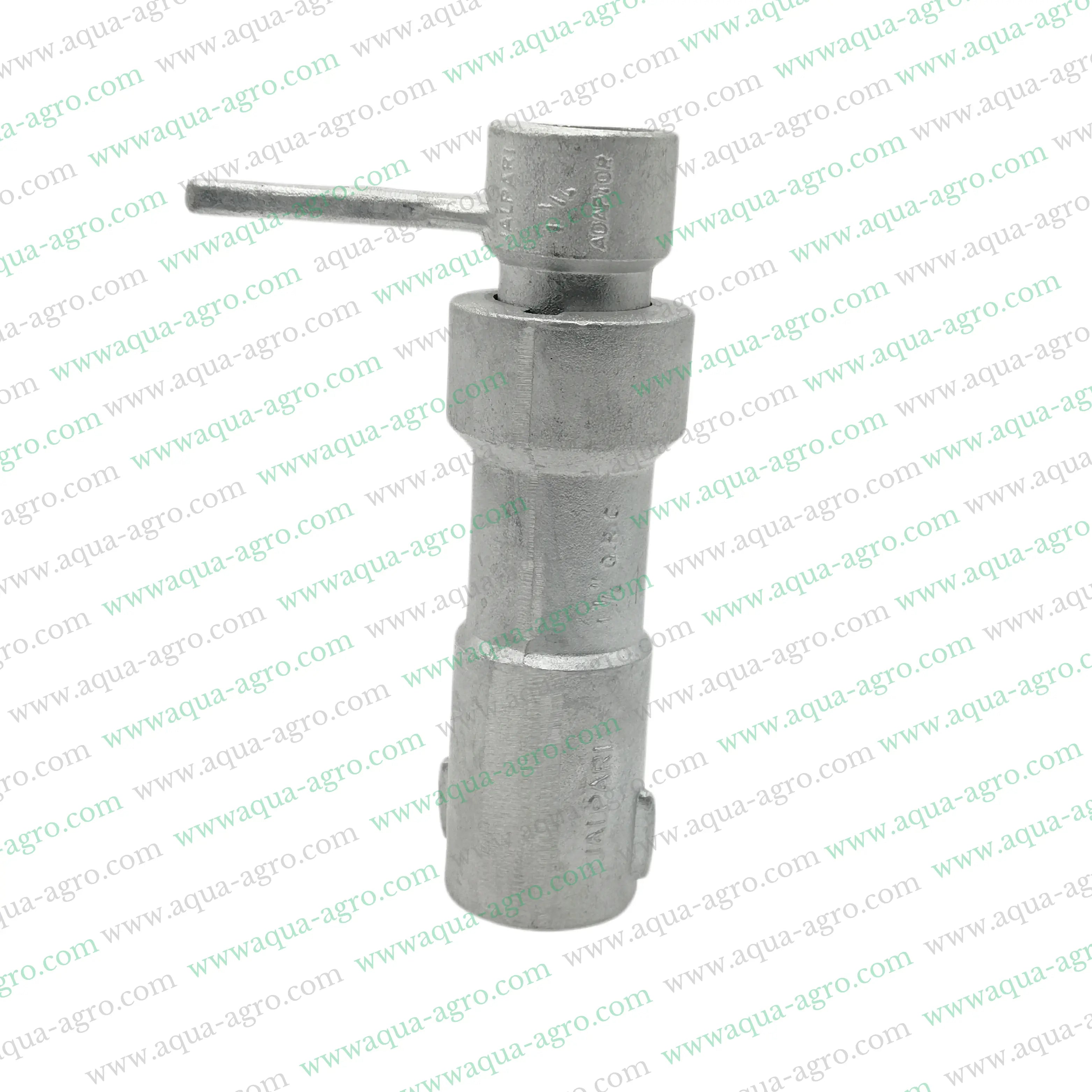
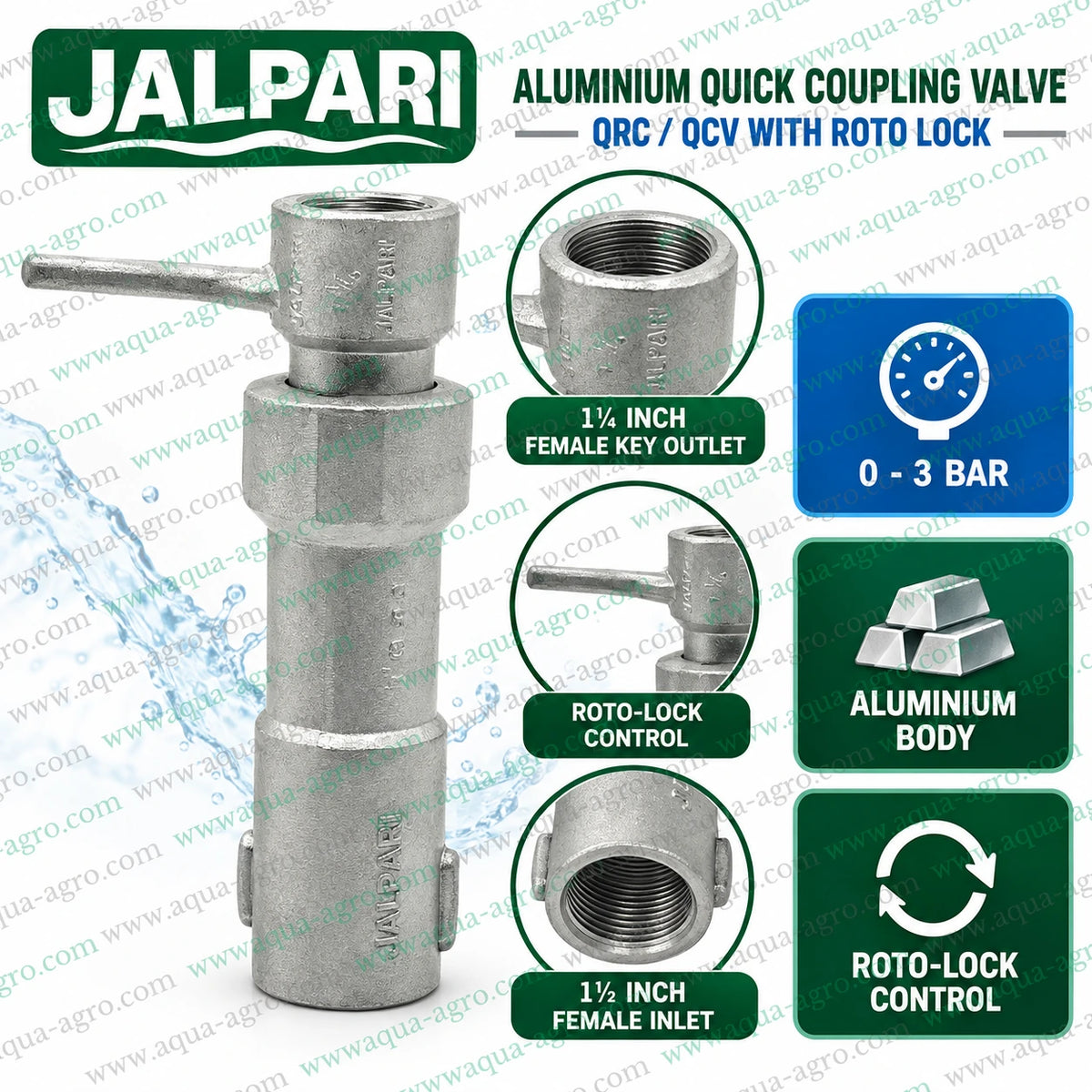
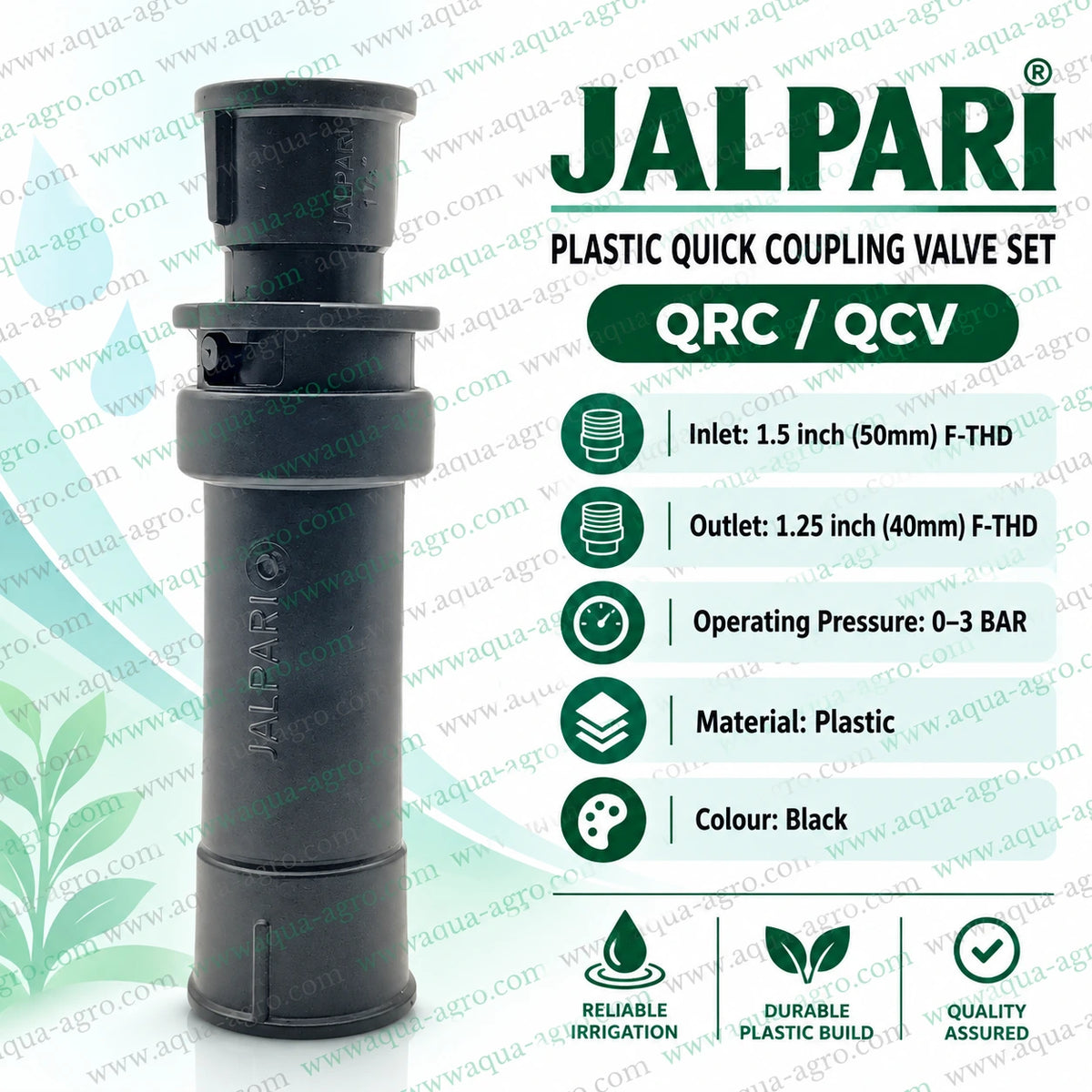
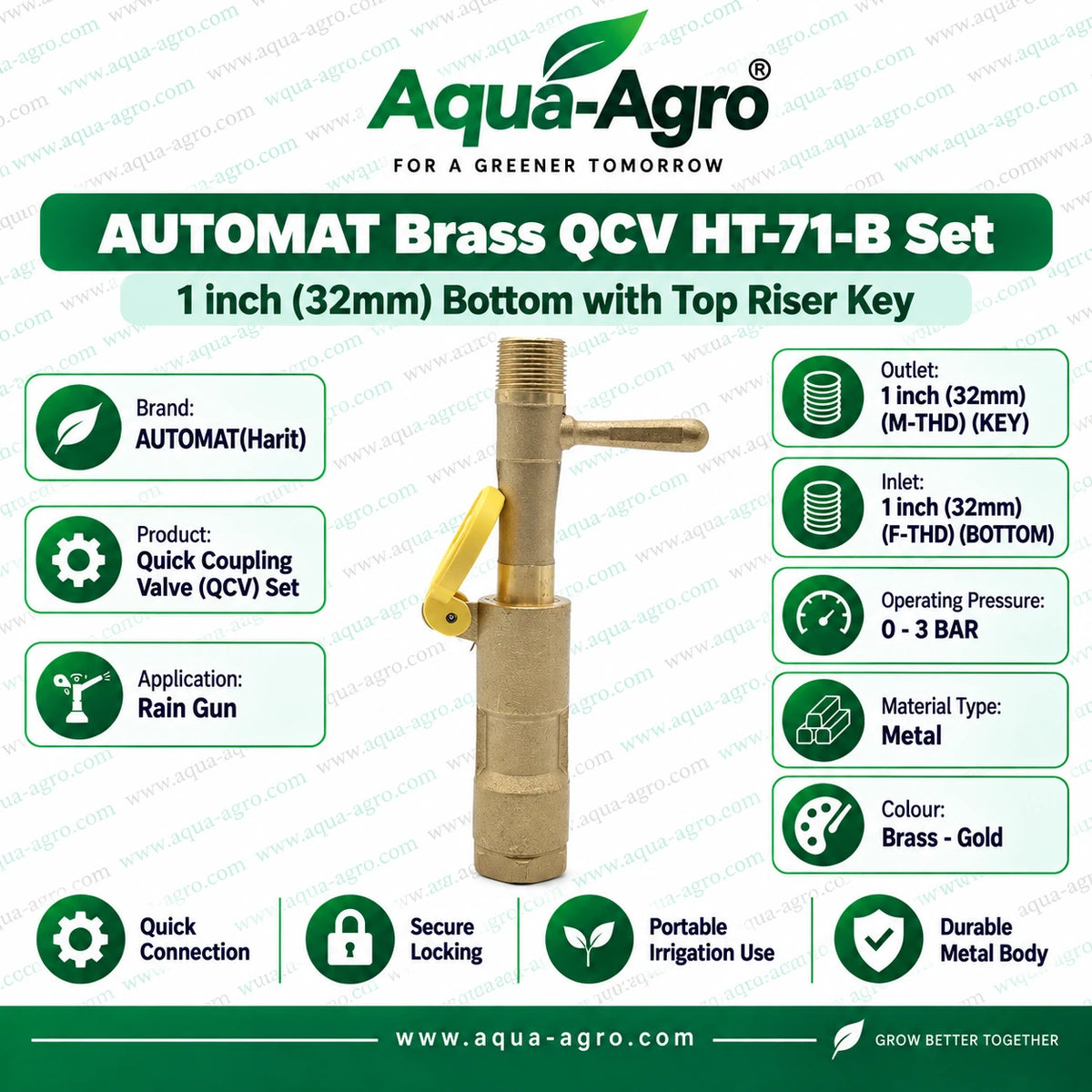
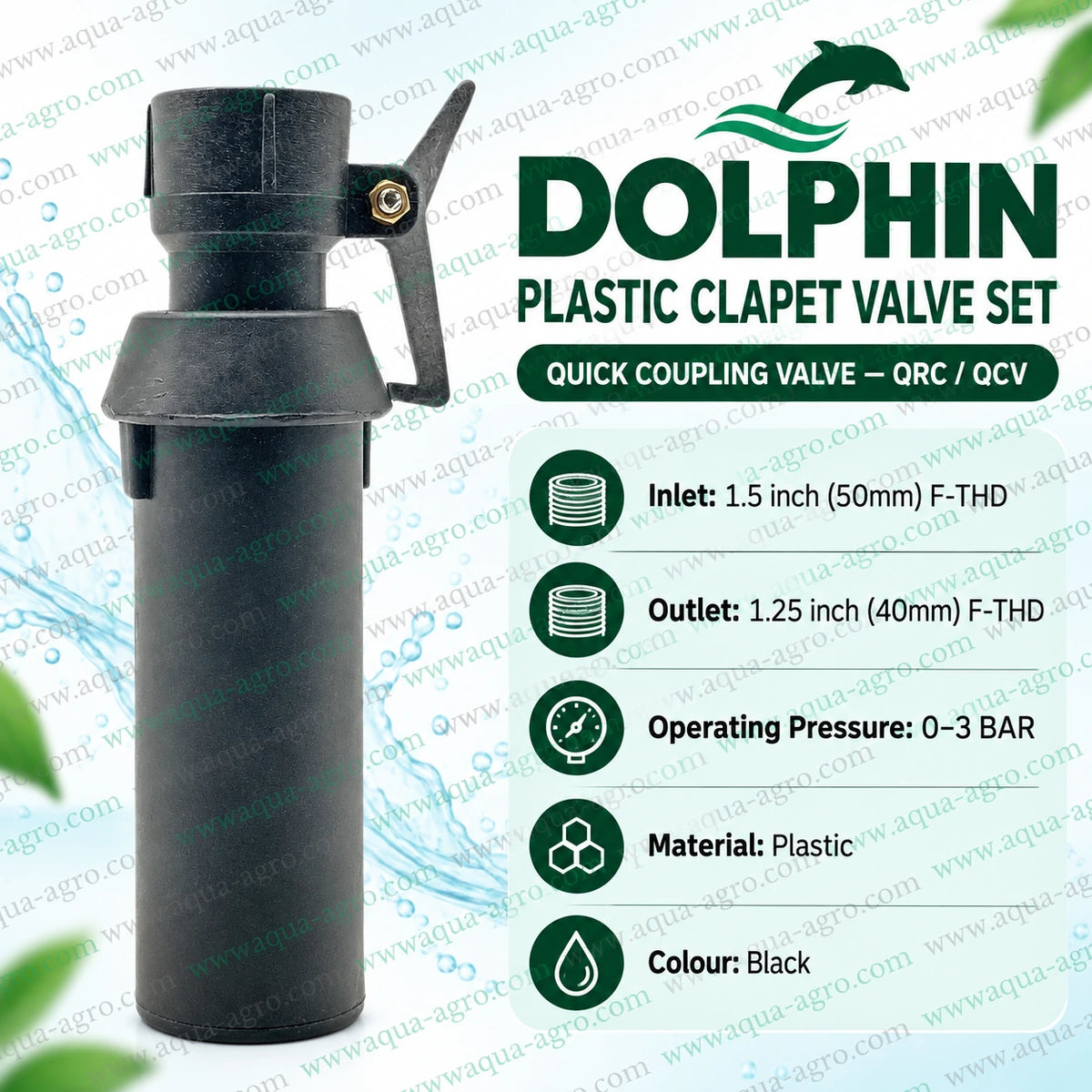
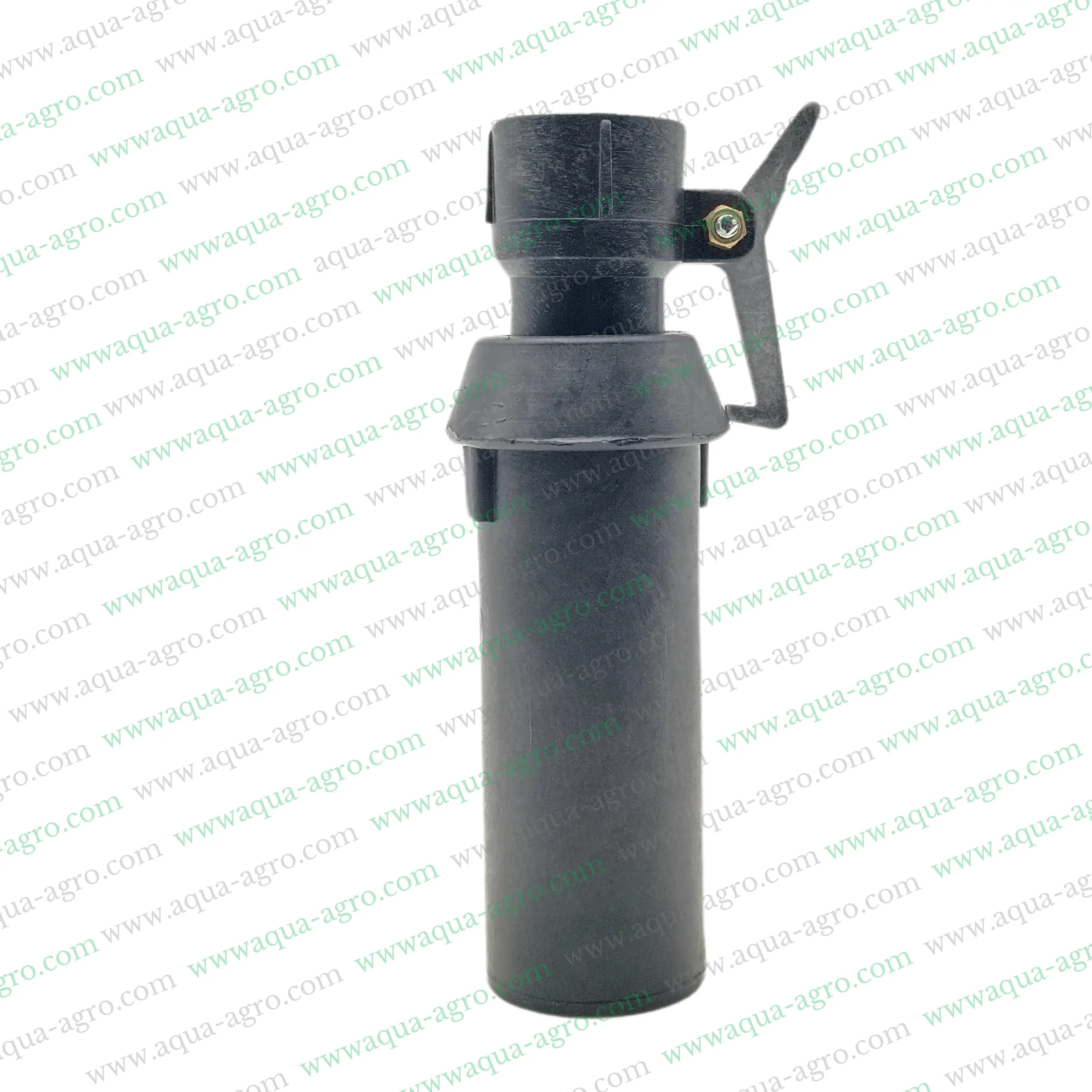
- Material: Use a brass quick coupling valve for moderate-pressure rugged applications, a plastic quick coupling valve for lightweight systems, and a stainless steel/die-cast aluminium quick coupling valve for high-pressure needs.
- Size compatibility: Ensure a snug fit for your system (e.g., 1 inch, 1.5 inch).
- Pressure requirements: match the valve’s rating to your application.
Products Related to Quick Coupling Valves for you
Complement Your Setup
Complete your system with our range of related accessories to enhance functionality.
Explore a wide range of irrigation tools such as micro sprinklers, rain pipes, rain pipe fittings, irrigation filters and a lot more!
Coupling maintenance: tips for maintaining QRC valve/QCV valve
- Regularly clean connections to prevent blockages.
- Inspect for wear and tear, especially in high-pressure environments.
- Replace seals or gaskets as needed to avoid leaks.
- Apply lubrication to threaded or moving parts for smooth operation.
Troubleshooting Common Issues of Quick release coupling valves
- Leaks: Check for worn-out seals or improper connections.
- Difficulty in Connecting: Ensure compatible sizes and clean fittings.
FAQs regarding Quick Coupling Valve (QRC /QCV)
What is a Quick Coupling Valve (QRC/QCV)?
A Quick Coupling Valve (QRC/QCV) is a device that facilitates quick, leak-proof connections and disconnections in fluid or gas systems. Equipped with a quick-release mechanism, it ensures efficient operation across a variety of applications, from irrigation to industrial equipment.
What are Quick Coupling Valves also known as?
Quick Coupling Valves are also referred to as:
- QRC valve (Quick Release Coupling) Valves
- QCV valve (Quick Coupling Valve)
- Quick Connect Valves
- Quick Release Mechanisms
What industries use QRC valve / QCV valve?
Quick Coupling Valves are widely used in:
- Agriculture: Irrigation systems, sprinklers, and rain guns.
- Garden and landscape: Hydrant points, Quick hose points
- HVAC: Cooling and heating systems.
- Automotive: Fluid transfer and maintenance tasks.
- Industrial applications: High-pressure fluid or gas systems in factories.
How do I choose the right QRC valve / QCV valve?
To select the right Quick release coupling valve:
- Material Compatibility: Use brass for moderate pressure, stainless steel / die-cast aluminium for high pressure, or plastic for lightweight applications.
- Pressure Requirements: Check the valve's pressure rating for your system.
- Size Compatibility: Ensure the valve matches the size of your hoses and fittings.
- Environment: Opt for corrosion-resistant couplings for harsh environments.
What are the benefits of using Quick Coupling Valves?
- Ease of Use: Simplifies connection and disconnection processes.
- Durability: Long-lasting with proper maintenance.
- Leak Prevention: Reliable seals reduce fluid or gas wastage.
- Versatility: Suitable for a wide range of industries and systems.
What materials are quick-release coupling valves made of?
Quick release coupling valves are available in:
- Brass: Ideal for moderate pressure systems.
- Stainless Steel: Suitable for high-pressure and corrosive environments.
- Plastic: lightweight and cost-effective for specific applications.
Is the QRC valve / QCV valve suitable for both fluid and gas applications?
Yes, quick-release couplings are designed to handle both fluids and gases (specific models). Always verify the specifications to ensure compatibility with your intended use.
Can Quick Coupling Valves handle high-pressure systems?
Yes, many QRC valve and QCV valve models, especially those made of stainless steel, are engineered for high-pressure applications. Always confirm the valve's pressure rating before use.
What is the lifespan of a Quick Coupling Valve?
With proper care, a high-quality Quick Coupling Valve can last several years. Factors such as material, application environment, and maintenance impact longevity.
Do Quick Coupling Valves require regular maintenance?
Yes, regular coupling maintenance is crucial.
- Clean the valve to remove dirt or debris.
- Inspect for wear and tear, especially seals and gaskets.
- Replace components as needed to prevent leaks and maintain efficiency.
Can Quick Coupling Valves be customised for specific needs?
Yes, some manufacturers offer customisation options for size, material, and design to meet unique industrial or agricultural requirements.
How do I install a Quick Coupling Valve?
Quick coupling valve installation involves:
- Connecting the valve to compatible pipes with suitable adaptors, hoses, or fittings.
- Ensuring a secure fit to prevent leaks.
- Following the manufacturer’s guidelines for optimal performance.
What safety considerations should I follow when using a QRC valve / QCV valve?
- Verify pressure and temperature compatibility.
- Ensure proper sealing during connections.
- Inspect valves regularly for wear and tear to avoid accidents.
What are the signs that a QRC valve / QCV valve needs replacement?
Replace the valve if you notice:
- Persistent leaks.
- Difficulty in coupling or decoupling.
- Visible corrosion or damage.
- Reduced flow efficiency.
Are Quick Coupling Valves eco-friendly?
Yes, many Quick Coupling Valves are designed to minimise fluid or gas loss during connections, reducing environmental waste and promoting sustainability.
How do Quick Coupling Valves improve operational efficiency?
By enabling faster connections and disconnections, Quick Coupling Valves significantly reduce downtime and improve workflow efficiency in industries like agriculture and manufacturing.
What is the difference between a single shut-off and a double shut-off QRC valve / QCV valve?
- Single Shut-Off Valves: Stop flow on one side only, ideal for basic operations.
- Double Shut-Off Valves: Stop flow on both sides, offering enhanced safety and functionality.
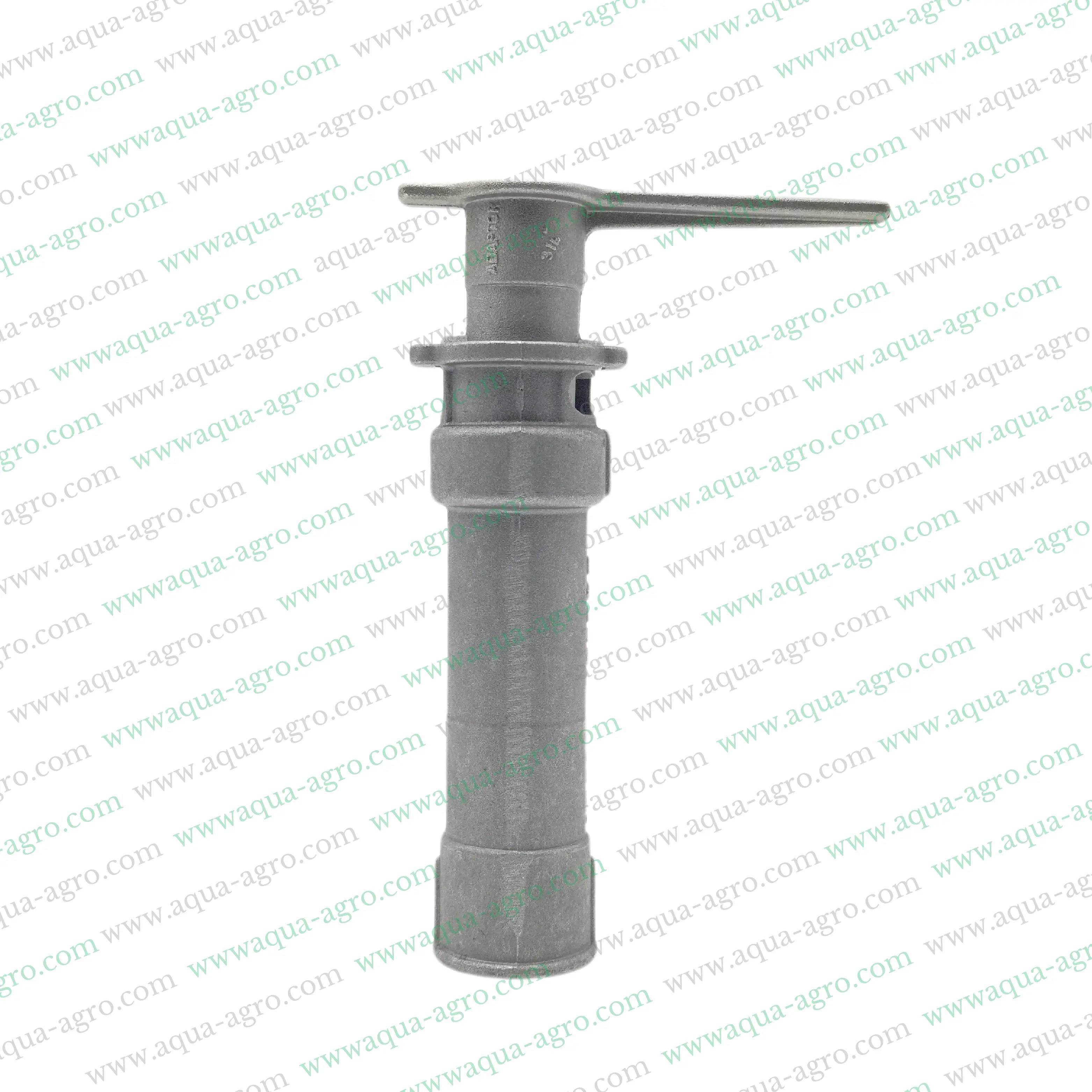
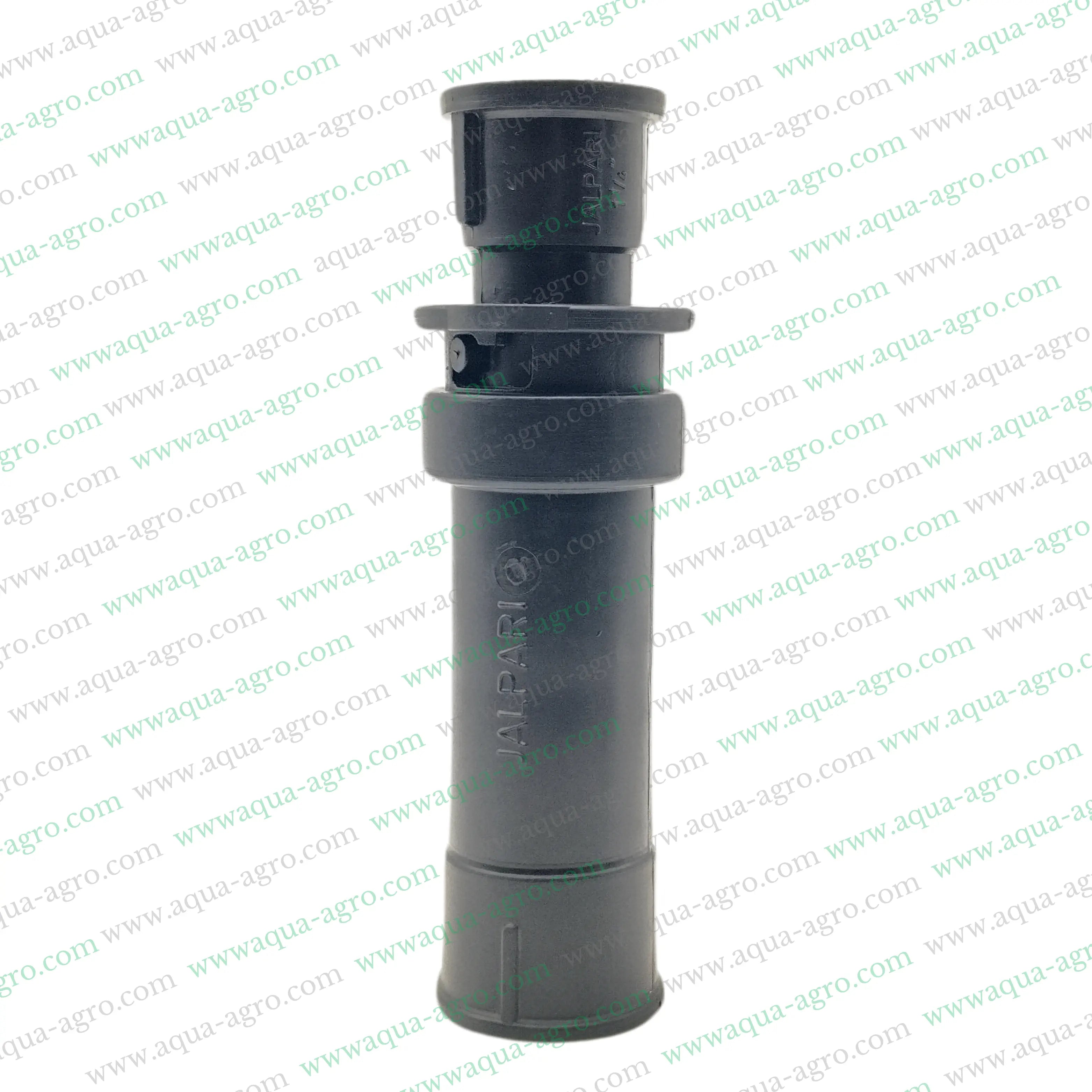
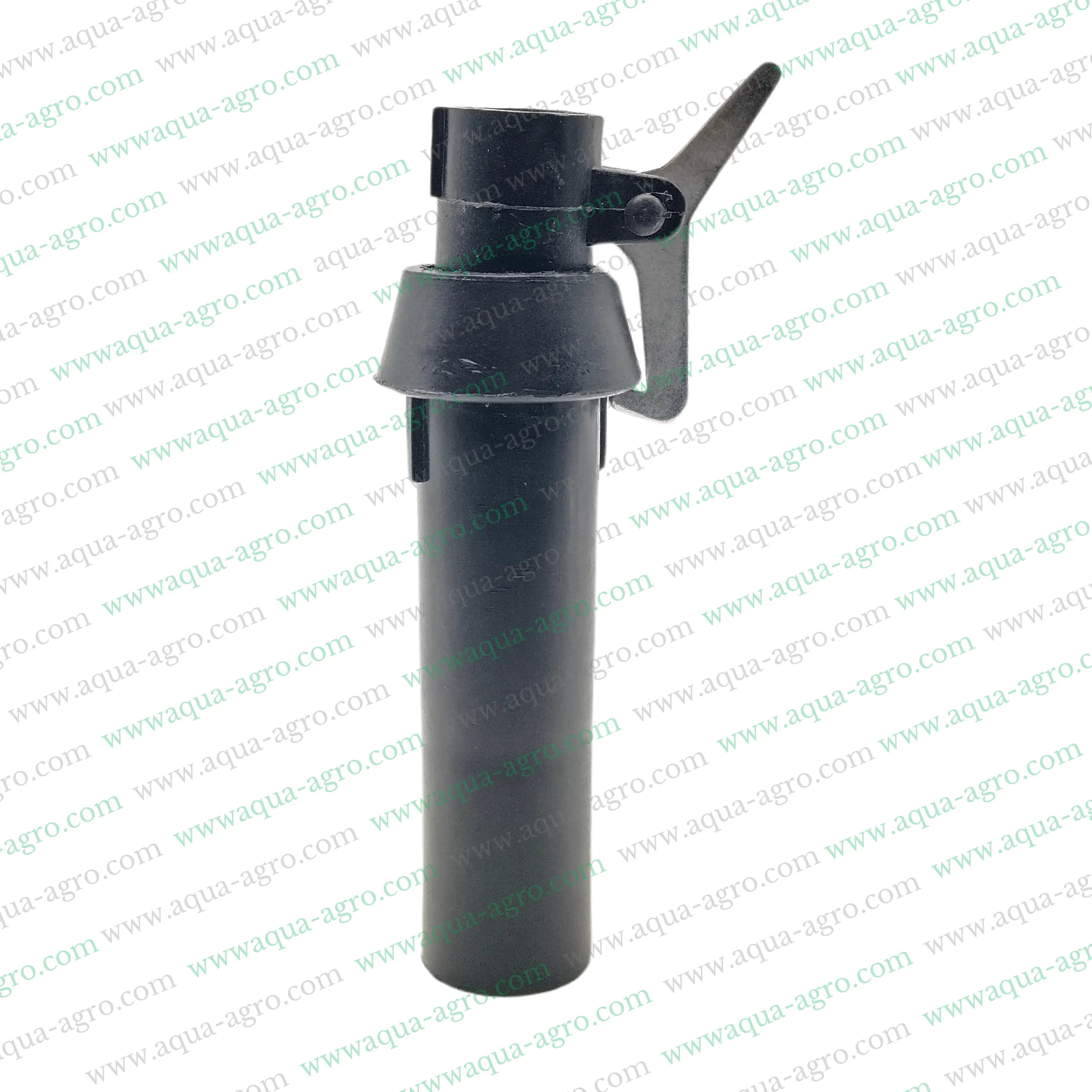
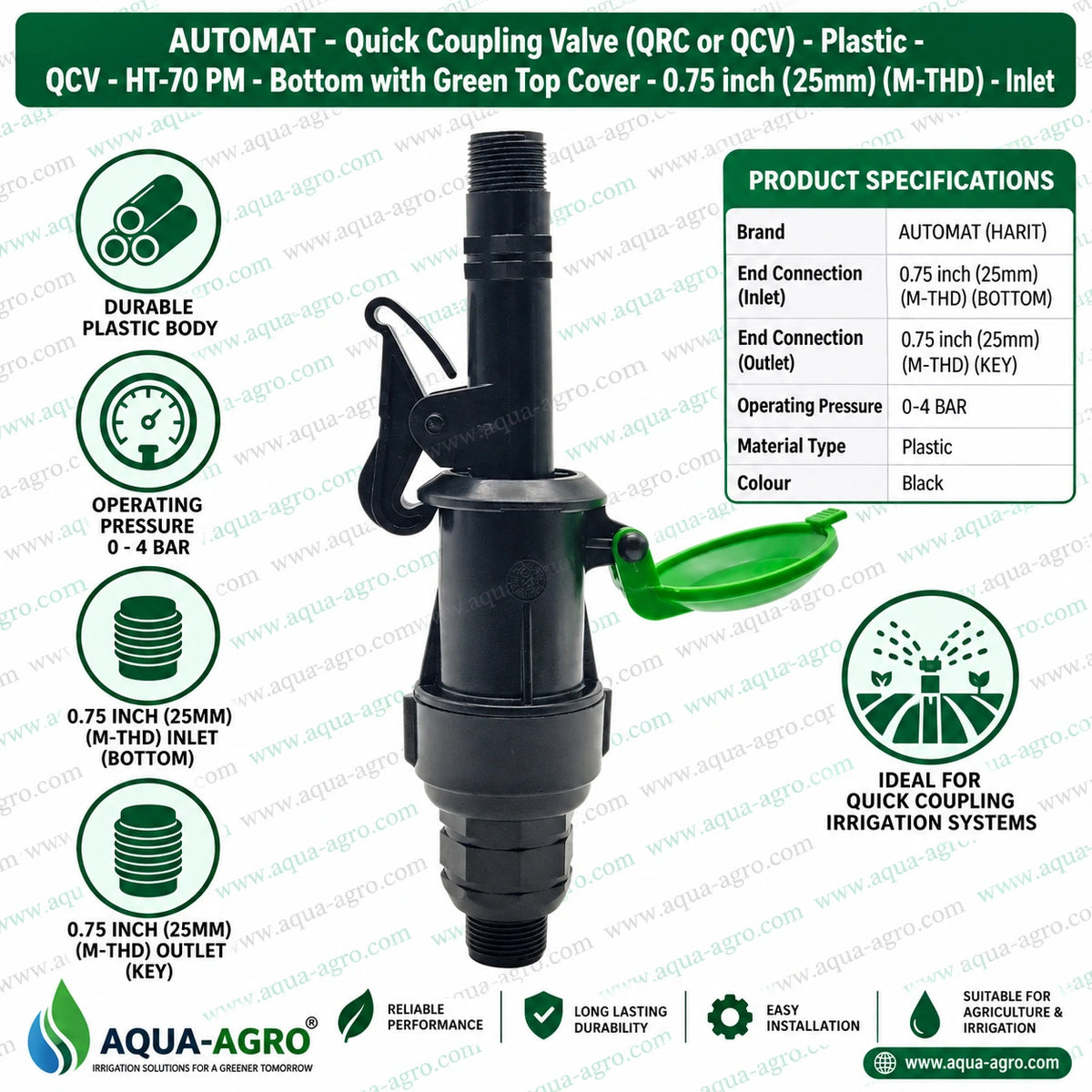
What is the function of the valve bottom and valve top in Quick Coupling Valves?
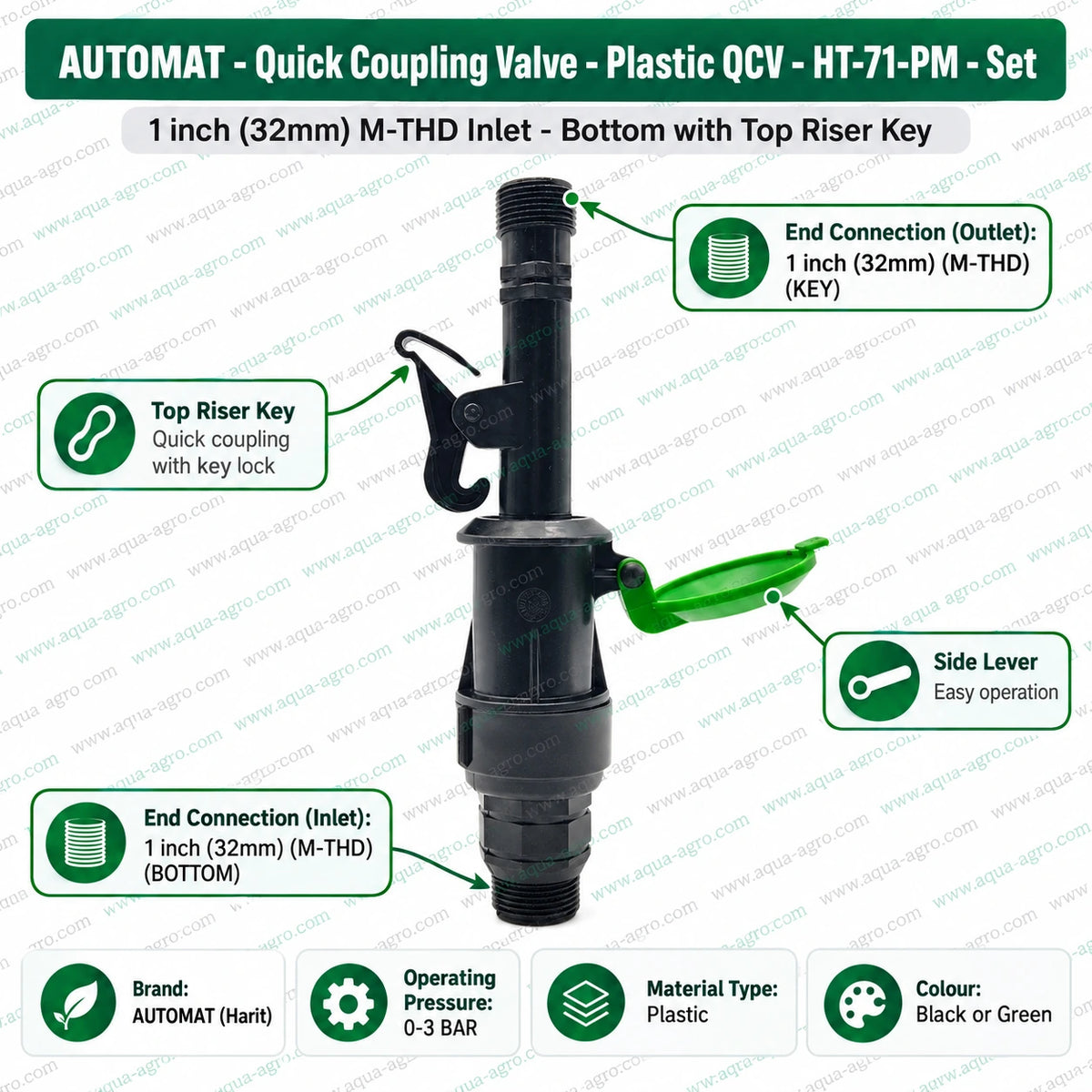
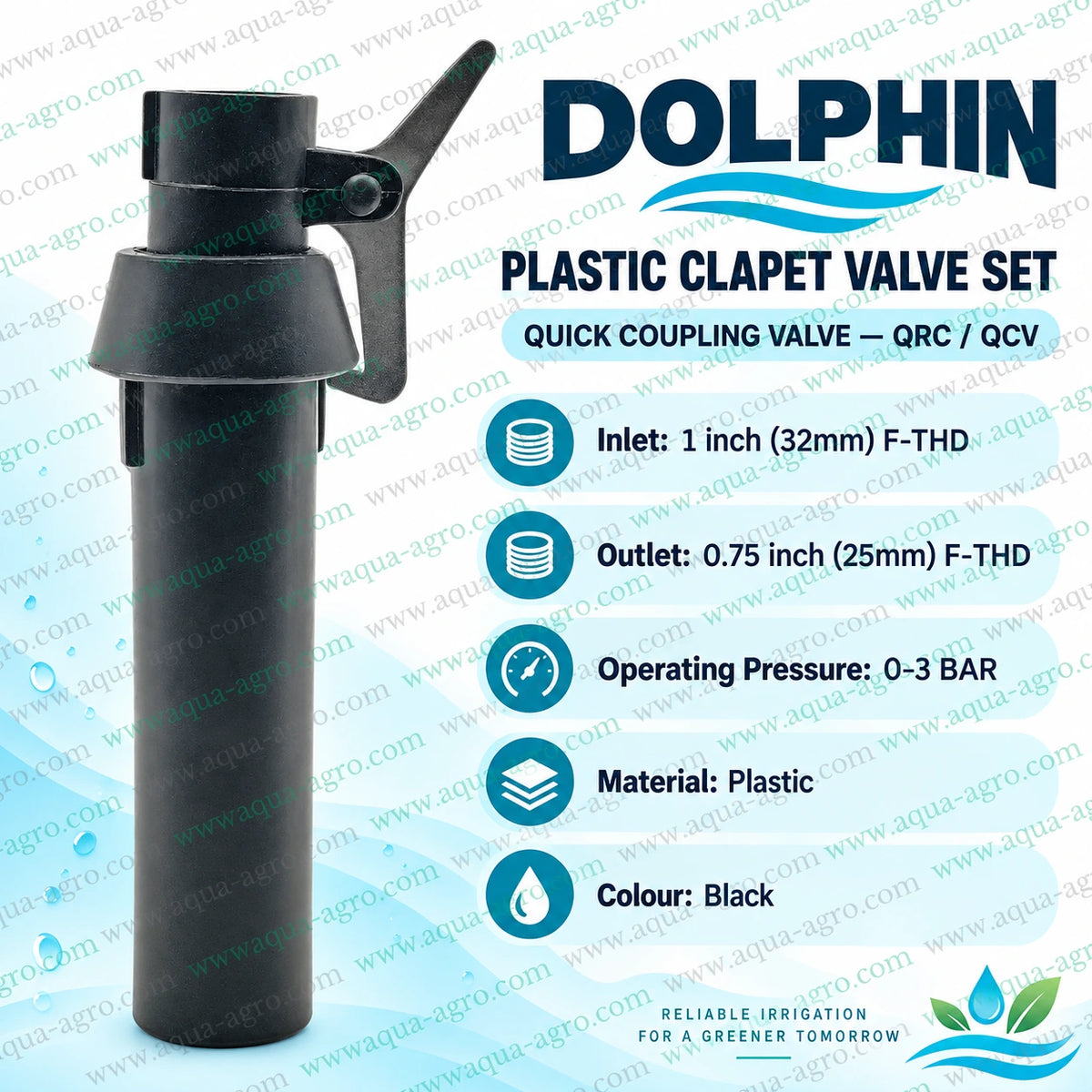
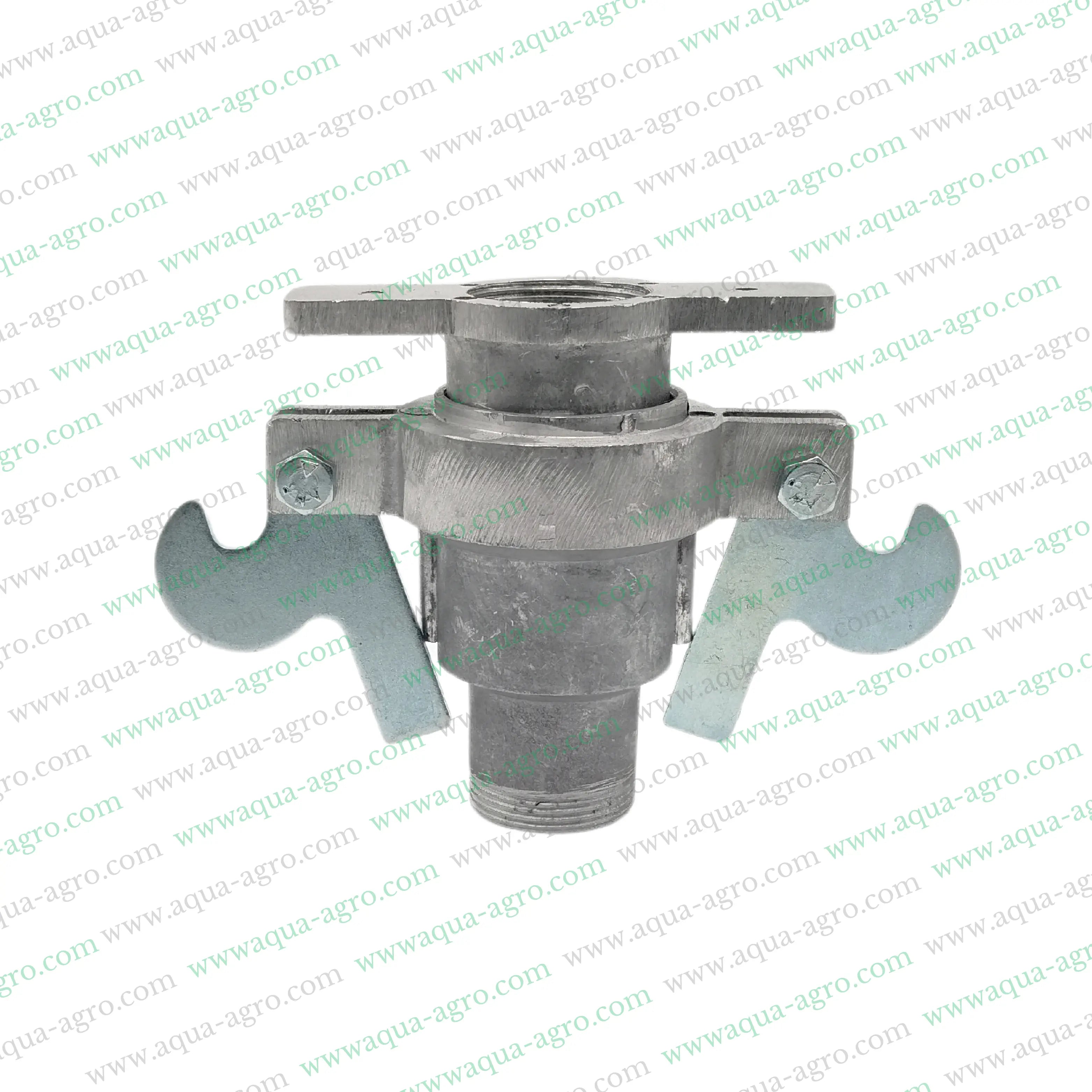
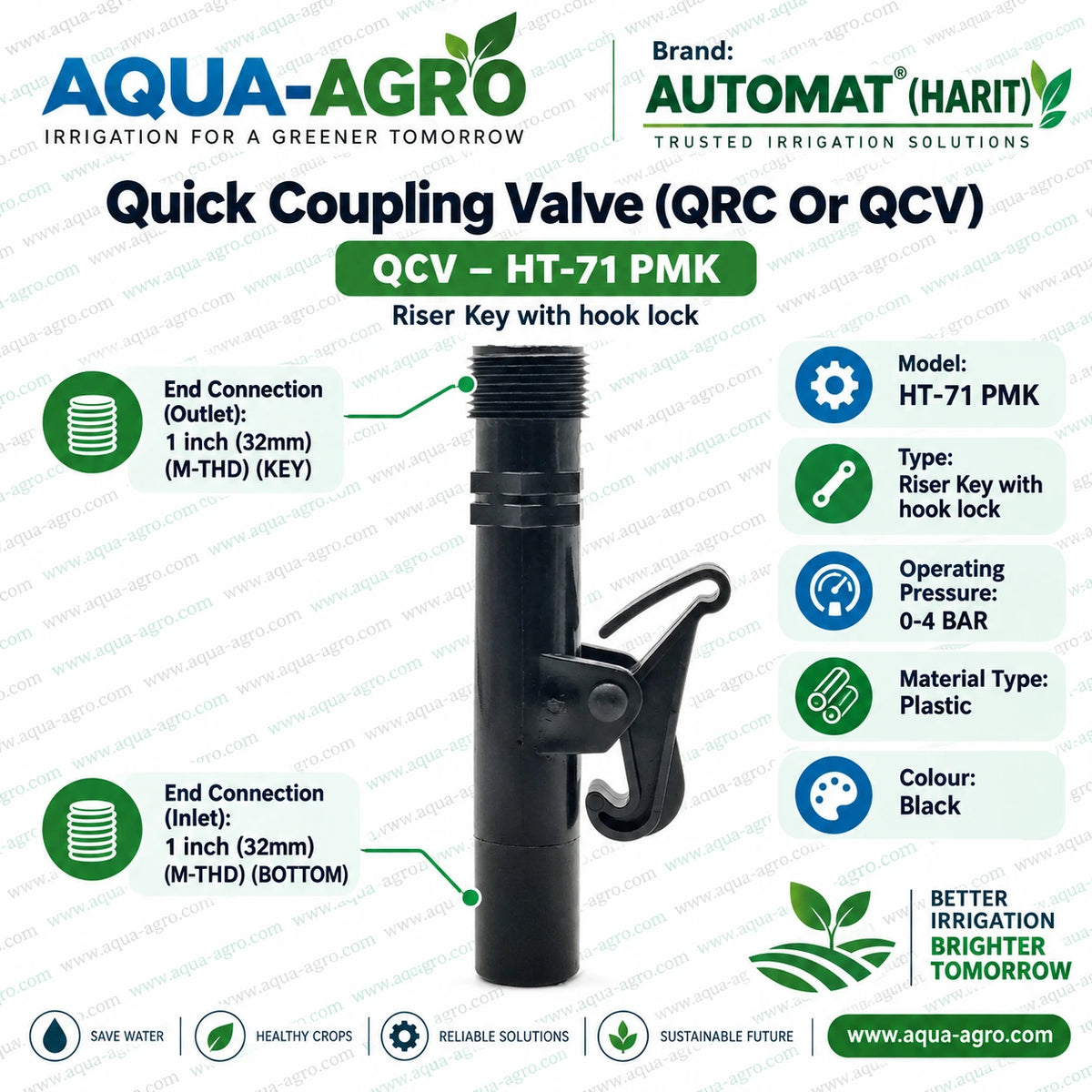
The valve bottom serves as the inlet connection point, allowing fluid or gas to enter the system, while the valve top acts as the outlet, directing the flow to the connected hose or equipment. Together, they ensure secure and leak-free connections.
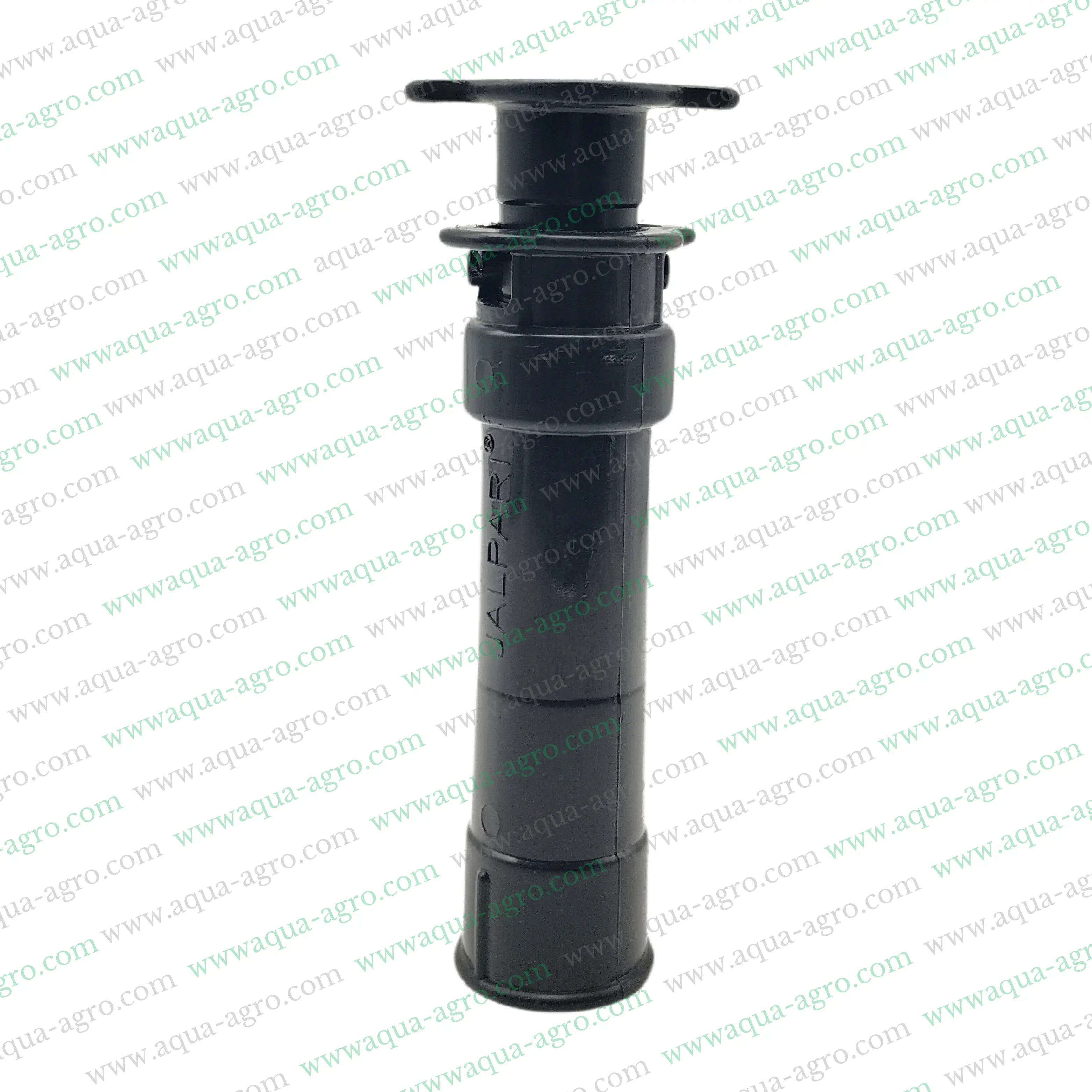
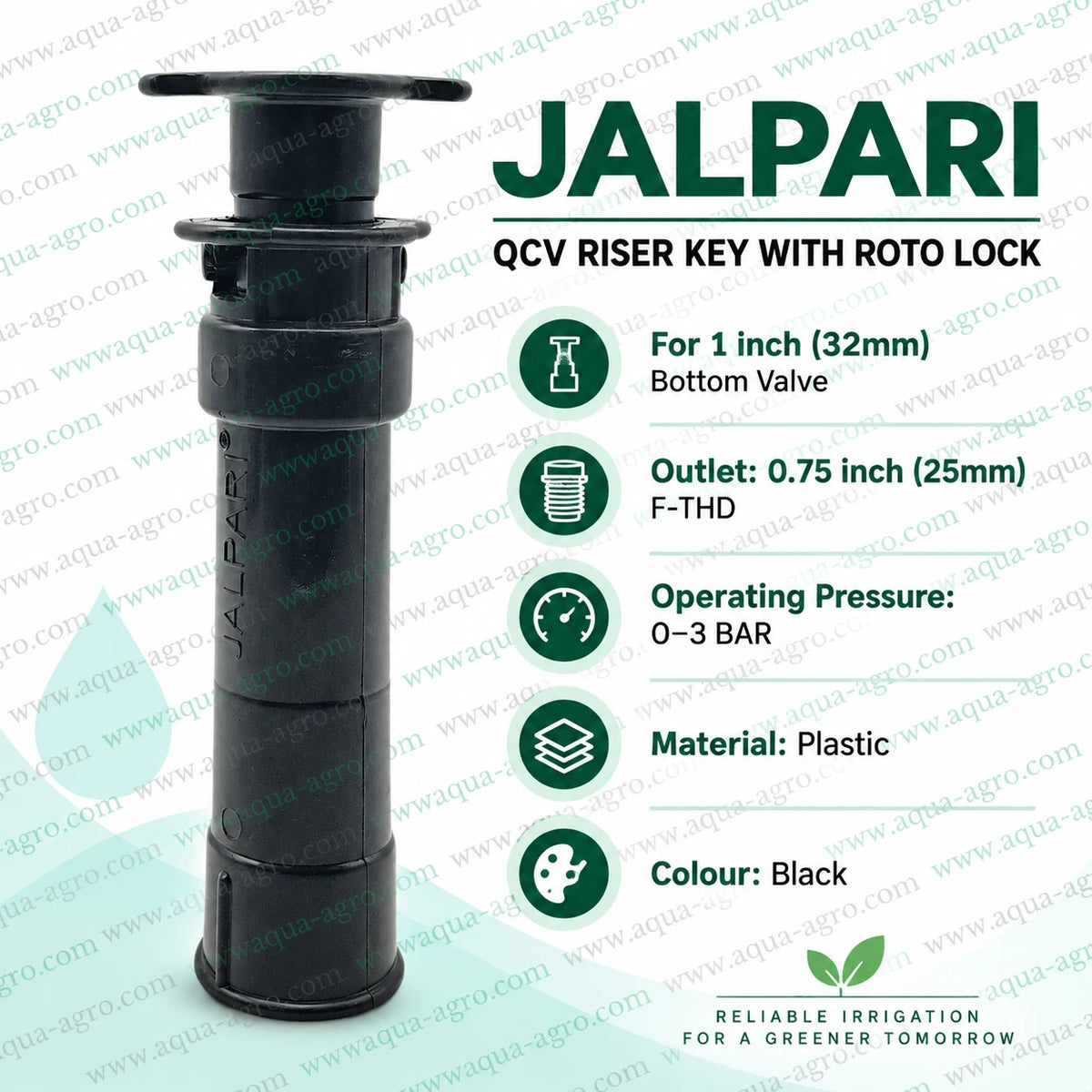
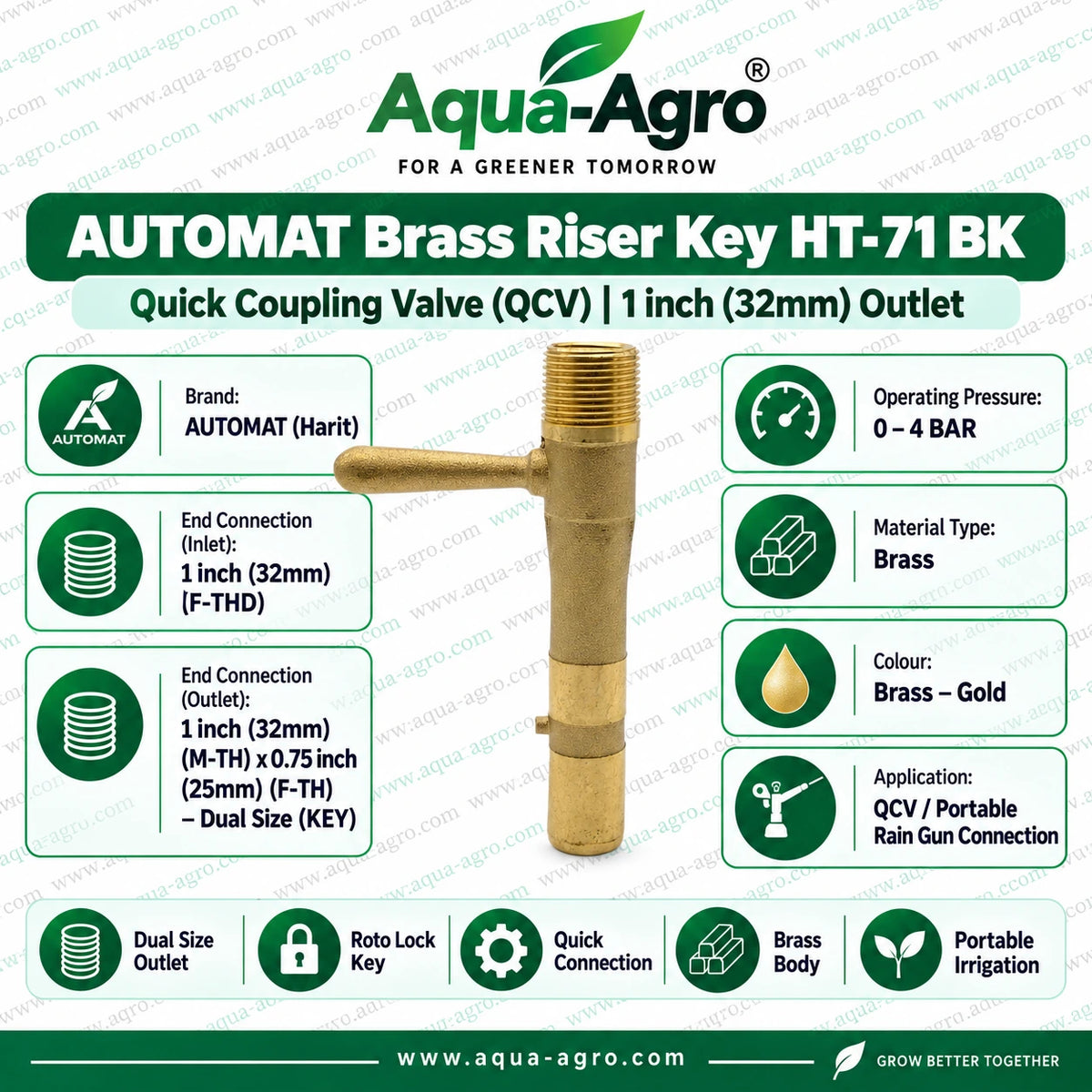
What is a riser key, and how is it used with Quick Coupling Valves?
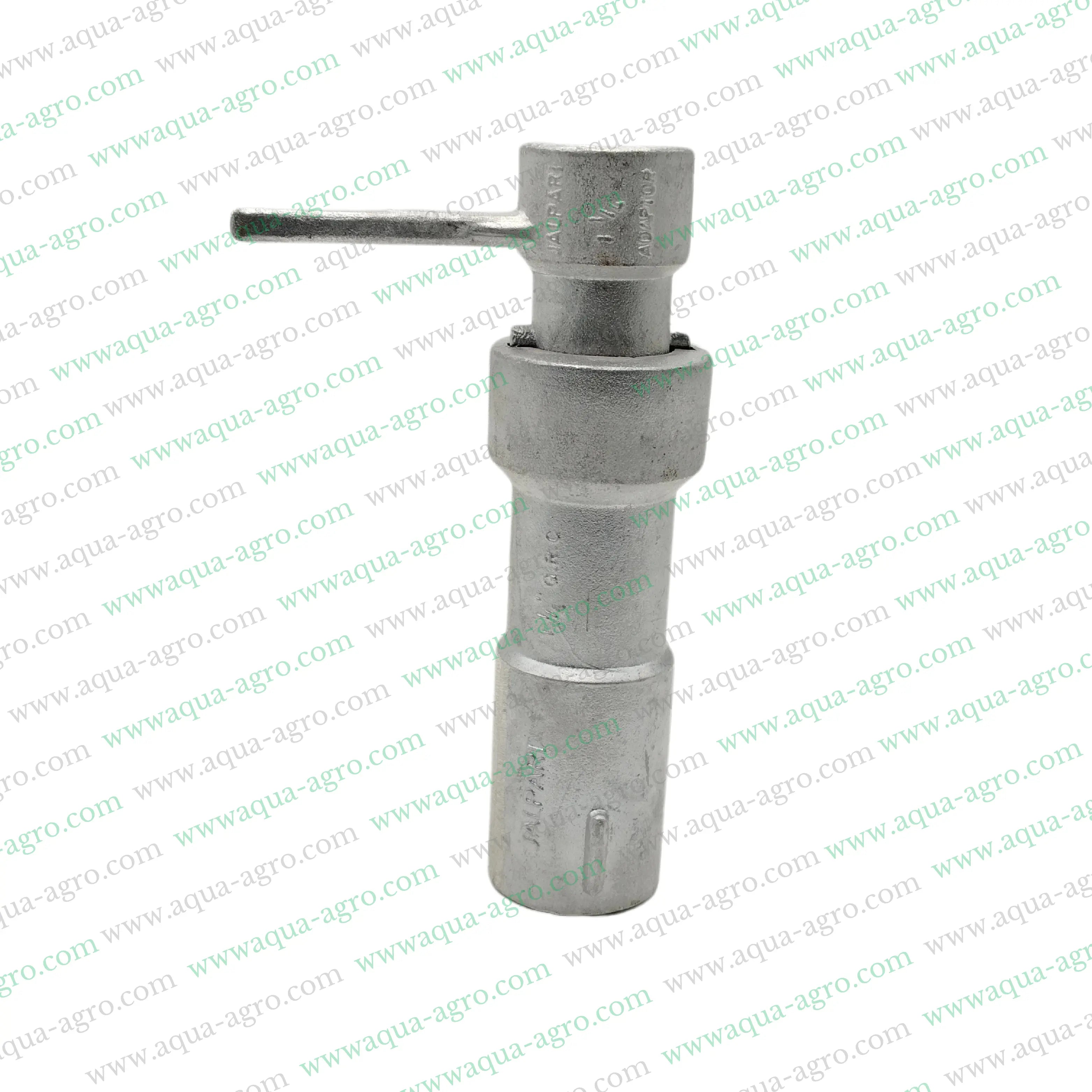
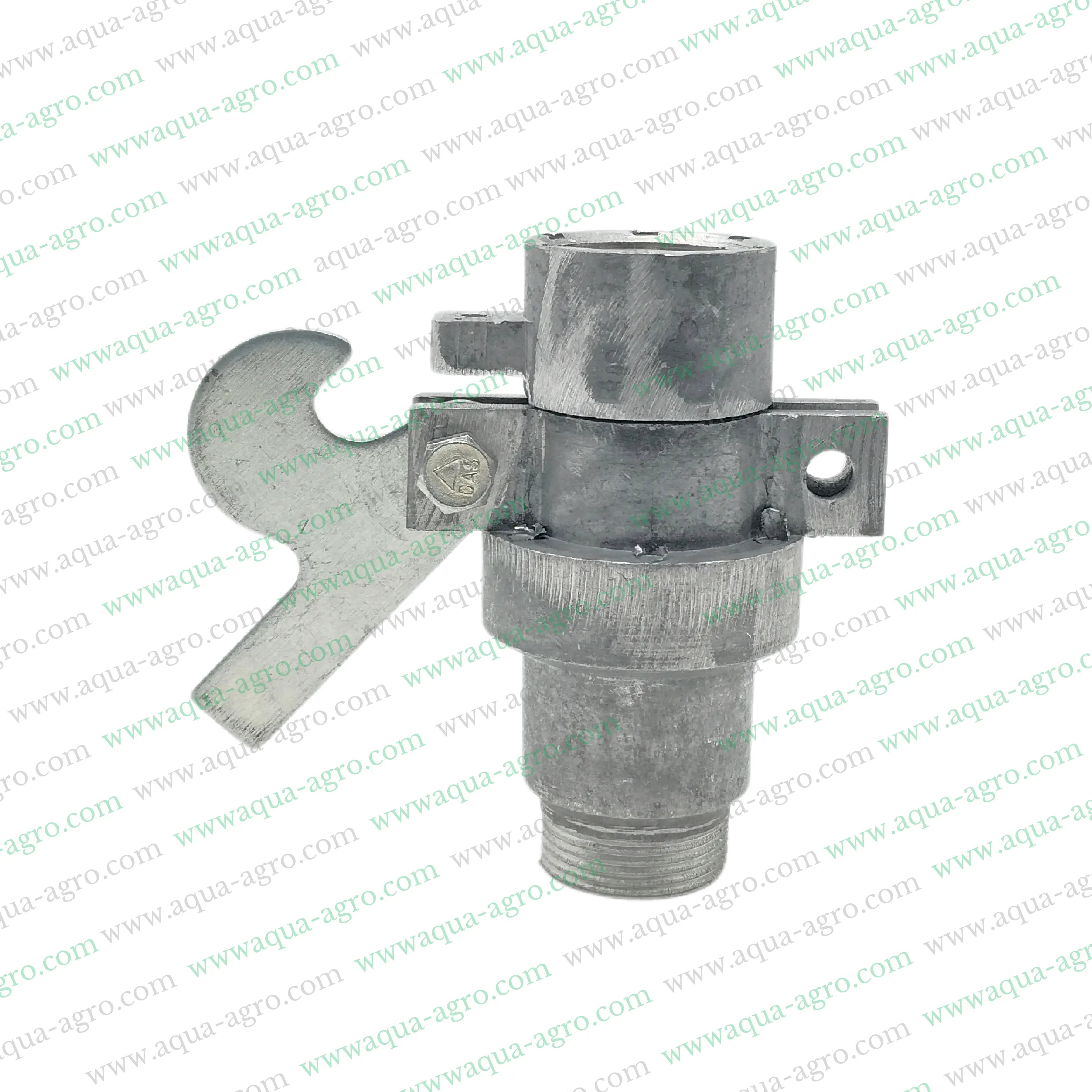
A riser key is nothing but a valve top, a tool used to operate or connect certain types of Quick Coupling Valves. It ensures easy engagement or disengagement of the valve components, especially in systems where manual access is required. This is particularly common in irrigation setups and other field applications.
Can I replace the valve bottom, valve top, or riser key separately?
Yes, many Quick Coupling Valves are designed with replaceable components, including the valve bottom, valve top, and riser key. This allows for cost-effective maintenance and extends the overall lifespan of the valve system.